 English
 Français
News
Content
- 1 What Your Candle Vessel Actually Does to the Burn
- 2 Glass Candle Vessels: Clarity, Versatility, and the Thermal Shock Risk
- 3 Cement Candle Vessels: Raw Aesthetic with Industrial-Grade Durability
- 4 Ceramic Candle Vessels: Premium Feel with Superior Heat Retention
- 5 Metal Candle Vessels: Lightweight, Shatterproof, and Travel-Ready
- 6 Side-by-Side: Choosing the Right Vessel for Your Brand
- 7 Key Questions to Ask Before You Order
Pick up any two candles side by side and the wax blend, fragrance load, and wick size might be nearly identical — but the vessel changes everything. How quickly heat builds at the base, how evenly the melt pool forms, how cool the exterior stays after an hour of burning, even how well the fragrance throws across a room: all of it is shaped by the material surrounding the wax. For brands sourcing vessels at scale, that material choice also carries downstream consequences for shipping weight, customization options, and shelf positioning.
This guide breaks down the four most common candle vessel materials — glass, cement, ceramic, and metal — covering the physics behind each, the aesthetic they project, and the brand contexts where they perform best.
What Your Candle Vessel Actually Does to the Burn
A vessel is not passive. It conducts, retains, and radiates heat throughout every burn cycle, and those thermal behaviors directly affect performance. Materials with high thermal conductivity transfer heat quickly to the exterior wall, which helps regulate internal temperature but can make the vessel hot to the touch. Materials with lower conductivity insulate more effectively, keeping the exterior cooler while allowing the wax pool to build heat gradually.
Scent throw is also affected. A stable, evenly distributed heat environment helps fragrance molecules volatilize at a consistent rate, producing a steadier scent output. Vessels that create hot spots — due to uneven wall thickness or poor heat distribution — tend to produce erratic throw, peaking early and fading quickly. Understanding these basics makes it much easier to match a material to a specific candle formula and end-use context.
Glass Candle Vessels: Clarity, Versatility, and the Thermal Shock Risk
Glass is the default choice across the candle industry for good reason. It is non-porous, chemically inert, and fully compatible with every major wax type — soy, paraffin, coconut, and beeswax blends. Its transparency lets the flame glow through the wax, creating the warm visual effect that defines the modern jar candle aesthetic. It also excels at scent throw: the non-porous surface holds fragrance in the wax rather than absorbing it, and the enclosed environment allows heat to build steadily around the wick.
The critical variable with glass is thermal shock resistance. Not all glass is created equal. Standard soda-lime glass has a relatively high coefficient of thermal expansion, meaning it expands significantly under heat — and if that expansion is uneven, the vessel cracks. The safer option for candle use is borosilicate glass, which has a much lower expansion rate and handles repeated heat cycles reliably. Candle-specific glass vessels should also meet industry thermal shock differential requirements outlined by safety bodies such as the National Candle Association, which reference ASTM F-2179 as the benchmark for annealed soda-lime-silicate glass containers used in candle applications.
One counterintuitive point worth noting: thicker glass walls do not automatically mean safer glass. Because heat travels more slowly through a thick wall, the temperature differential between the inner and outer surfaces can actually increase — raising the risk of stress fractures. Uniform wall thickness and appropriate glass composition matter more than sheer bulk.
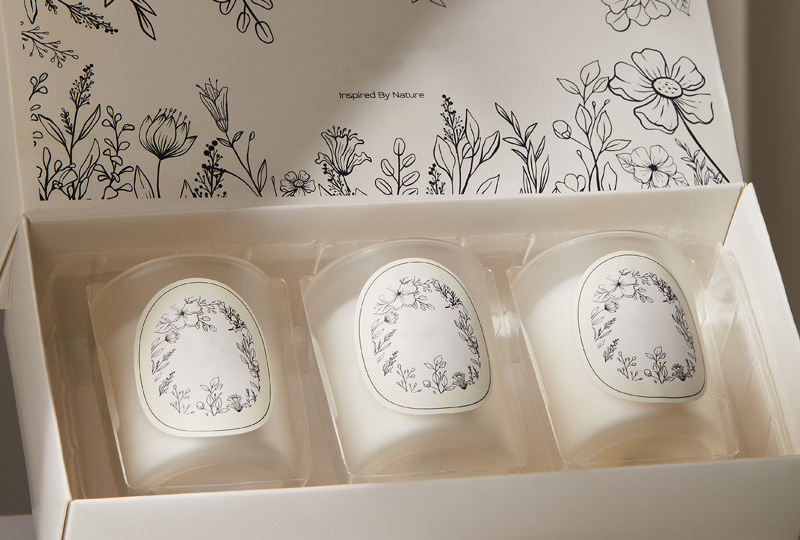
From a branding perspective, glass suits a wide range of aesthetics — from minimalist and Scandinavian to maximalist and jewel-toned. It is the most versatile vessel material for surface decoration, accepting labels, frosting, color coating, and screen printing with ease. Explore our glass candle vessels available in a range of shapes and styles to find the right fit for your line.
Cement Candle Vessels: Raw Aesthetic with Industrial-Grade Durability
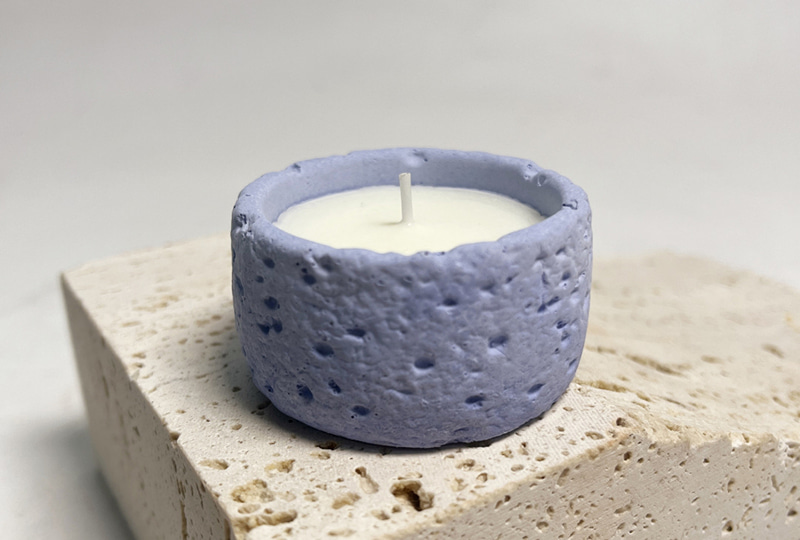
Cement has become one of the most sought-after materials in the artisanal and lifestyle candle space. Its matte, textured surface reads as intentionally unfinished — a deliberate rejection of the polished and predictable. That visual quality positions it naturally within industrial, minimalist, and earthy brand identities, and it photographs exceptionally well in lifestyle contexts.
Structurally, cement is among the most durable vessel materials available. It handles heat well, is highly resistant to impact damage compared to glass, and can be produced in nearly any shape through custom molds — giving brands significant flexibility in vessel geometry. It also accepts surface treatments including pigments and color washes, enabling branded color palettes without sacrificing the raw texture.
The key technical requirement is proper interior sealing. Unsealed cement is porous and will absorb wax and fragrance oils, which creates both performance problems (inconsistent scent throw, uneven burning) and potential fire hazards. A heat-resistant, non-toxic sealant applied to the interior surface before pouring is non-negotiable. Quality cement vessels are also hand-sanded and machine-mixed to ensure consistent density and a smooth inner finish.
Cement vessels are heavier than glass or metal, which increases shipping costs — a consideration worth factoring into landed cost calculations for large orders. For brands targeting home décor, gift retail, or the boutique hotel amenity segment, however, the weight often reads as a premium quality signal rather than a drawback. Browse our cement candle vessels suited to industrial-style and artisanal brands for current specifications and customization options.
Ceramic Candle Vessels: Premium Feel with Superior Heat Retention
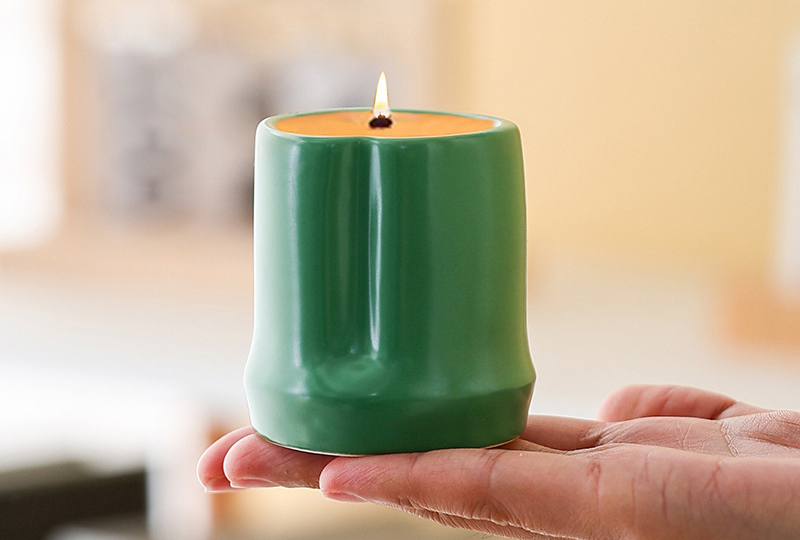
Ceramic occupies the luxury end of the vessel spectrum. High-fired stoneware and porcelain offer a tactile quality — weight, smoothness, the slight warmth of the material in hand — that no other vessel material replicates at the same price point. For premium candle lines, gifting collections, and spa or hospitality applications, ceramic signals quality before the candle is even lit.
From a thermal performance standpoint, ceramic has a distinct advantage over glass: it conducts heat more slowly, which means the exterior wall stays cooler to the touch during extended burns. This makes ceramic vessels safer to handle mid-burn and reduces the risk of accidental contact burns in retail or hospitality environments. The slower heat buildup also tends to produce more even melt pools, which benefits both burn time and scent consistency.
The important specification to understand is firing temperature and clay body. High-fired stoneware (fired above approximately 1200°C) produces a dense, vitrified structure that is essentially non-porous and highly resistant to thermal shock. Lower-fired earthenware, by contrast, remains porous and is not suitable for repeated candle use without a reliable glaze barrier. When sourcing ceramic vessels, always confirm the clay body type and whether the interior is fully glazed — an unglazed interior in a porous ceramic will absorb wax and fragrance just as an unsealed cement vessel would.
Ceramic also offers strong reuse potential. Once the wax is consumed, a well-made ceramic vessel can serve as a planter, storage container, or decorative object — a quality that resonates with sustainability-conscious consumers and adds perceived value to the original purchase. View our ceramic candle vessels designed for premium and luxury collections to explore available forms and finishes.
Metal Candle Vessels: Lightweight, Shatterproof, and Travel-Ready
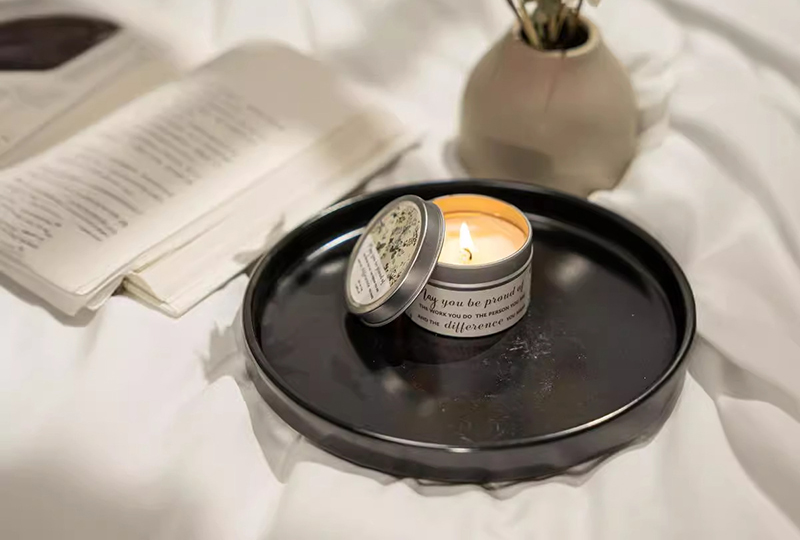
Metal tins and vessels occupy a specific and well-defined niche: portability. They are the lightest candle vessel category, shatterproof under normal handling conditions, and stack efficiently for shipping and retail display. For travel candle lines, subscription boxes, promotional gifting, and entry-price-point retail, metal offers a combination of practicality and cost efficiency that other materials cannot match.
Metal conducts heat rapidly, which means the exterior surface of a metal vessel can become warm during extended burns — faster than glass or ceramic. Proper wick sizing is therefore important to avoid overheating the container. The upside of that conductivity is that the wax pool tends to establish quickly, reducing the risk of tunneling on first burn.
The obvious trade-off is opacity. Metal does not allow the flame or wax to be seen, which removes the visual warmth that many consumers associate with candle ambiance. This makes metal less suitable for luxury or mood-lighting applications where the visual element is central to the product experience. Metal vessels also have limited customization depth compared to glass or ceramic — surface printing and embossing are the primary options, and texture variation is constrained by manufacturing processes.
For the right application, however, metal is highly effective. It accepts both matte and gloss finishes, comes in tin, aluminum, and steel constructions, and can be produced in a wide range of sizes with consistent dimensional tolerances. Our metal candle vessels built for portability and modern appeal are available in multiple configurations for both standard and custom programs.
Side-by-Side: Choosing the Right Vessel for Your Brand
Each material has a clear performance profile. The table below summarizes the key variables that typically drive sourcing decisions:
| Material | Heat Resistance | Exterior Coolness During Burn | Shipping Weight | Customization Range | Best Brand Fit |
|---|---|---|---|---|---|
| Glass | High (borosilicate) / Moderate (soda-lime) | Moderate — can get warm | Moderate | Very High | Minimalist, luxury, lifestyle, transparent designs |
| Cement | High | Good | Heavy | High (shape + color) | Industrial, artisanal, earthy, boutique hotel |
| Ceramic | Very High (stoneware) | Excellent | Heavy | High (glaze, shape, texture) | Luxury, gifting, spa, premium home décor |
| Metal | Moderate | Low — heats quickly | Light | Moderate (print, emboss) | Travel, subscription, promotional, entry retail |
Key Questions to Ask Before You Order
The comparison table is a starting point. Narrowing to the right vessel for a specific product line usually comes down to a handful of focused questions:
- What wax type are you using? Soy wax burns cooler than paraffin blends, which affects how much heat stress the vessel will experience. High-fragrance-load formulas also put more demand on the vessel interior.
- Where will the candle be sold and used? A retail shelf candle has different drop and handling requirements than a spa amenity or a subscription box insert. Fragility tolerance varies significantly by channel.
- What does your shipping profile look like? Cement and ceramic add substantial weight per unit. For brands shipping direct-to-consumer at volume, that weight difference has a real impact on per-order fulfillment costs.
- What aesthetic does your brand occupy? Vessel material should reinforce, not contradict, the brand's visual language. A raw cement vessel placed in a maximalist floral brand creates a confusing product experience; a sleek glass jar in an industrial brand reads as generic.
- Do you need OEM/ODM customization? All four materials support custom branding, but the techniques and minimum order quantities differ. Glass and metal are generally more accessible at lower MOQs; custom-mold ceramic and cement programs typically require larger commitments.
Getting these questions answered before locking in a vessel spec saves significant cost and development time downstream. If you are building out a new candle line or expanding an existing one, our team can help match vessel material to formula, fragrance load, and brand positioning. See the full range of custom candle jar options or reach out directly to discuss OEM and ODM programs.