 English
 Français
News
Content
- 1 What is a Private Label Candle? OEM vs. ODM Explained
- 2 Why Partner with an OEM/ODM Manufacturer?
- 3 How to Choose the Right Candle Manufacturer: 5 Key Criteria
- 4 The 4-Step Customization Process: From Brief to Bulk
- 5 How Much Does It Cost to Start a Private Label Candle Brand?
- 6 Scent Selection and Packaging: Building Your Brand Identity
- 7 Common Pitfalls to Avoid When Working with Overseas Manufacturers
- 8 Your 12-Week Launch Timeline
What is a Private Label Candle? OEM vs. ODM Explained
A private label candle is a product manufactured by a third-party facility but sold under your brand name. You control the design and branding. The factory handles the production chemistry, safety testing, and filling. The market for home fragrance continues to expand, pushing more entrepreneurs toward this model. Choosing between OEM and ODM is the first strategic decision you will make.
OEM (Original Equipment Manufacturing) means you bring the formula. You specify the exact wax blend, fragrance oil ratio, wick series, and vessel dimensions. The factory executes your recipe precisely. This path offers maximum creative control but demands a longer development timeline and higher upfront investment in sampling.
ODM (Original Design Manufacturing) works differently. The factory presents a catalog of pre-tested candle configurations. You select a finished design, and the manufacturer applies your logo and packaging. This reduces research and development costs drastically. It also shortens time-to-market significantly because safety and burn tests are already complete.
| Feature | OEM (Full Customization) | ODM (Catalog Selection) |
|---|---|---|
| Customization Freedom | Complete control over wax blend, vessel design, and fragrance strength | Limited to updating labels, lid colors, or box finishes |
| Development Cycle | Typically 6–10 weeks for lab sampling and stability testing | Usually 2–4 weeks for label proofs and pre-shipment samples |
| Minimum Order Quantity | Often higher; 500–1,200 units per fragrance is standard | Far more flexible; some suppliers allow 50–120 units per scent |
| Cost Structure | Includes separate mold fees, lab bench fees, and raw material testing | Costs are amortized; you share the mold and formula investment with other buyers |
If you are launching a luxury niche where a unique cement candle vessel defines your brand, OEM is often necessary. If speed is the priority, ODM gets you to market before the holiday rush. Many successful brands start with ODM to test market fit, then transition to OEM for signature products once sales data validates the concept.
Why Partner with an OEM/ODM Manufacturer?
The alternative to private label manufacturing is in-house production. That path requires leasing industrial space, investing in melting tanks, and holding inventory of raw materials that degrade over time. It shifts your focus from marketing to logistics. Partnering with a specialized facility changes this equation entirely.
You are buying speed and scalability. You are also buying a compliance department. Established exporters maintain REACH certification, FDA registration where applicable, and stable IFRA-compliant fragrance libraries. They solve problems you do not want to own. Here is why direct-to-brand manufacturers have become the preferred route:
- Radically shorter launch windows. Formulating and testing a candle in-house can consume half a year. A prepared ODM partner with an existing glass jar catalog ships finished samples in under 15 business days.
- Capital-light startup structure. You avoid fixed costs like mixing equipment and climate-controlled storage. You finance only variable costs linked to sellable inventory.
- Batch-level consistency. Professional manufacturers log environmental conditions during pours. They use calibrated scales that track fragrance load to within 0.1 grams per vessel. This precision is difficult to replicate in a small studio.
- Linear scalability. When a retailer doubles your purchase order, the manufacturer absorbs the volume spike. You do not need to hire six new production staff overnight.
The key advantage is focus. You allocate your limited time to brand storytelling, influencer seeding, and customer retention. The factory focuses on defect rates and melt pool diameters. This division of labor is the foundation of every rapidly scaling home fragrance brand on the market.
How to Choose the Right Candle Manufacturer: 5 Key Criteria
Not every factory claiming to produce "premium candles" actually meets the standard. A low price per unit can hide unacceptable defect rates. A beautiful showroom can mask weak supply chain management. You need hard filters. These five criteria separate reliable long-term suppliers from transactional low-cost vendors.
Apply these metrics before requesting a single sample. They will save you months of failed communication and wasted shipping fees on products you cannot sell.
1. Minimum Order Quantity (MOQ) Flexibility
Forget what a factory advertises on the homepage. Ask for the MOQ per fragrance, not per order. Some suppliers demand 1,000 units per scent. Others allow mixing multiple fragrances to hit that total. If you are testing 4 scents, the difference between a 500-unit total order and a 4,000-unit total order changes your risk profile entirely. A realistic startup MOQ should remain under 1,200 total pieces for a 4-scent collection.
2. Sampling Fee Structure and Speed
Custom samples cost between $50 and $150 per unit. This fee should be fully refundable against your production order. Demand a clear timeline: a supplier who needs more than 14 calendar days to ship a standard ODM sample with your logo likely has a bottleneck. For OEM, 21 days is reasonable for a first-round lab sample. Do not work with a manufacturer who treats sampling as a profit center.
3. Regulatory and Safety Certifications
If you plan to sell in the EU or North America, verify certifications. Ask for the paper certificate with a valid date for REACH or California Proposition 65 compliance. Confirm that fragrance oils conform to IFRA category 4 standards (candle use). A factory unable to show these on request is a potential legal risk for your brand.
4. Verified Client Portfolio
A competent manufacturer should show white-label or OEM work for established retail brands. While confidentiality clauses sometimes prevent this, they can often provide generic photos of production lines and packaging inspection stations. Cross-reference their business license on trade platforms. Look for at least a 2-year trading history with consistent export activity.
5. Communication Responsiveness
Measure the time between your first detailed inquiry and a precise, quoted response. If the reply takes over 48 hours without explanation, or if it ignores specific questions about candle wax density, you are likely dealing with a trading company acting as a middleman. Direct manufacturers answer technical questions with specific data, not vague reassurances.
The 4-Step Customization Process: From Brief to Bulk
Manufacturing a candle is a chemical process. It ends with a photogenic product shot, but it starts with specific gravity measurements, fragrance load calculations, and compatibility testing between the wax and the vessel liner. Treat the development cycle as a series of gates. Each gate unlocks the next investment of time and capital.
Step 1: The Design Brief (Days 1–5)
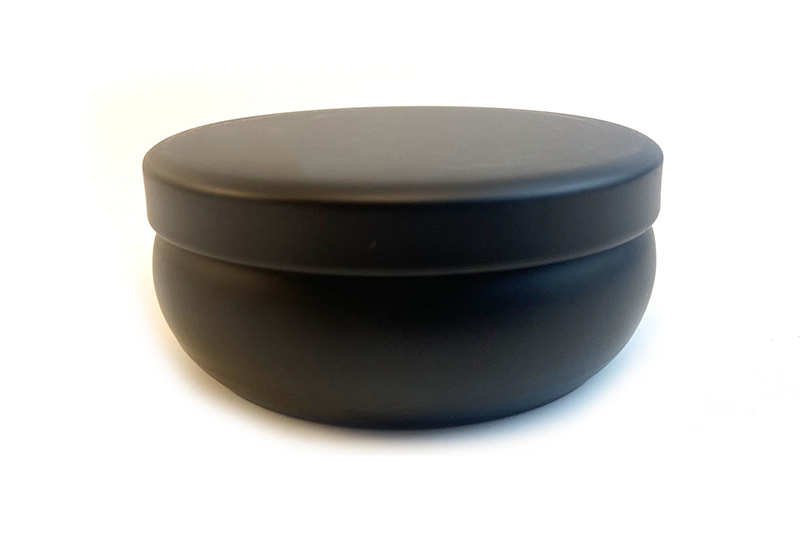
Deliver a precise document. Include your target retail price, the vessel material (e.g., ceramic, frosted glass, or a round metal jar), desired wax type, and the geographic market. The manufacturer needs your target market to calculate the maximum allowable fragrance load under local regulations. Vague briefs generate off-target samples.
Step 2: Lab Sampling and Stability (Days 6–21)
The factory pours first-shot samples. Expect imperfections in label placement at this stage. Focus on the product: cold scent throw, hot throw after 2 hours of burn, and whether the wick drowns. Request a burn test video with a timestamp. Approve the sample only after it has cured for a minimum of 7 days; a freshly poured candle smells different from one that has polymerized correctly.
Step 3: Mass Production Controls (Days 22–45)
Once samples are approved, production begins. Insist on a golden sample being sealed and stored by the factory as the absolute reference standard. During the run, they should measure wax pool temperature and fragrance percentage from random batch samples. This controls the biggest variable in private label: batch-to-batch scent drift. Any deviation outside a 2% tolerance from the golden sample is a defect.
Step 4: Pre-Shipment Inspection and Export (Days 46–55)
Never ship a full container without a third-party quality inspection. Engage an agency like QIMA or Bureau Veritas to conduct an AQL (Acceptable Quality Limit) 2.5 general inspection. They will check for soot, adhesion of the label, and glass integrity. The cost ($300–$400) is negligible compared to recalling a defective run from a fulfillment center.
How Much Does It Cost to Start a Private Label Candle Brand?
Your upfront cash requirement defines your ceiling. It limits the number of unique vessel molds you can fund and the shipping method you can afford. Air freight kills margins on candles because wax is heavy. Ocean freight takes time but makes the unit economics work. Below is a realistic tiered model based on a landed cost calculation including shipping and duty.
| Budget Tier | Total Investment | MOQ per Fragrance | Approx. Landed Cost per Unit | Typical Retail Price |
|---|---|---|---|---|
| Micro (Test Run) | $1,500 – $3,000 | 50 – 100 units | $3.50 – $4.80 | $14.00 – $18.00 |
| Small (Boutique Launch) | $5,000 – $12,000 | 200 – 500 units | $2.80 – $3.70 | $16.00 – $22.00 |
| Medium (Retail Ready) | $15,000 – $30,000 | 600 – 1,200 units | $2.10 – $2.80 | $18.00 – $26.00 |
A micro budget relies almost entirely on ODM stock vessel options. You will likely use standard glass candle containers with simple front labels. This keeps mold amortization fees at zero. At the medium tier, you can fund custom ceramic colors, engraved wooden lids, and multi-piece rigid gift boxes. The gross margin consistently exceeds 70% at each tier, provided you avoid air shipping. Your major cost risk is not the candle itself; it is the logistics of moving dense, fragile goods across the ocean.
Scent Selection and Packaging: Building Your Brand Identity
The scent is the product. The vessel is the purchase driver on social media. The box determines whether it is gifted. These three layers must work in sequence. A common strategic error is offering too many fragrances at launch, which fragments the MOQ and confuses the buyer.
Deploy a "3+1" fragrance architecture. Curate three mass-market anchor scents that close the sale based on universal preference data. Add one brand-signature scent that is deliberately distinctive. The anchors generate cash flow. The signature scent generates conversation and press mentions.
- Anchor 1: Vanilla Bean or Creamy Coconut (proven best-seller globally).
- Anchor 2: Lavender and Eucalyptus (calming; dominates bedroom and spa segments).
- Anchor 3: Sandalwood or Amber Noir (luxury base; appeals to unisex buyers).
- Signature: A complex blend like Smoked Fig and Oud, unique to your label.
Packaging creates the margin multiplier. A plain white box with a kraft sticker communicates budget. A rigid two-piece box with a ribbon pull and foil stamping shifts perception into luxury territory. The cost difference between a basic tuck box and a rigid magnetic lid box is roughly $1.20 per unit in manufacturing. The perceived value increase often permits a retail price jump of $8 to $12. That is a clear return on invested capital. Protect that investment with custom-fit inner corrugated inserts; broken glass upon arrival destroys the entire margin structure in a single refund.
Common Pitfalls to Avoid When Working with Overseas Manufacturers
Distance generates friction. Time zones delay simple questions. High-resolution photos can hide sloppy adhesion. Most launch failures are not caused by bad products; they are caused by process failures during the handoff between factory and warehouse. These are the most expensive mistakes.
Problem: Fragrance instability causing customer returns.
Cause: The brand approved a sample that had not fully cured. After 30 days in a hot container, the fragrance oil separated from the wax base. This creates visible wet spots and a rancid smell.
Prevention: Always request accelerated aging tests. Demand a sample that has been stored at 40 degrees Celsius for 72 hours before final sign-off.
Problem: Packaging crushing during transit.
Cause: The designer chose a soft rigid board without inner foam. Vibration during ocean freight slowly pulverizes the corners of the box, creating a damaged unboxing experience.
Prevention: Specify a 3-ply corrugated mailer even for the sample shipment. If the sample arrives damaged, the bulk order will arrive as dust.
Problem: Missing the holiday retail window.
Cause: The brand assumed a 30-day ocean transit, but ignored the 7-day port congestion and the 14-day US Customs exam waiting period.
Prevention: Add a 21-day buffer to the vessel estimated time of departure date. The true deadline for a Q4 product is an August factory exit, not a September one.
Your 12-Week Launch Timeline
A timeline converts an abstract desire into a calendar commitment. Every day in the candle supply chain matters because wax must rest, ships must depart, and retail buyers must place their seasonal orders months in advance. The schedule below assumes standard ocean freight to a North American port and a pre-existing ODM partnership. If you are doing deep OEM vessel development, add 3 weeks to the front end.
| Week | Phase | Key Tasks | Owner |
|---|---|---|---|
| 1–2 | Brief and Selection | Finalize design brief; select ODM fragrances; approve vessel specs | Brand Founder |
| 3–4 | Sampling | Factory ships pre-production samples; you conduct burn-test panel | Both Parties |
| 5–6 | Revisions and Final Approval | Confirm label dielines; approve golden sample; issue Purchase Order | Brand Founder |
| 7–8 | Bulk Production | Manufacturer pours and assembles; third-party inspector books date | Factory |
| 9–10 | Inspection and Export | AQL inspection passed; container loaded; original documents released | Factory & Inspector |
| 11–12 | Logistics and Fulfillment | Ocean transit; customs clearance; drayage to your 3PL warehouse | Freight Forwarder |
By week 13, you should have live inventory at a fulfillment center. This timeline demands that you do not overthink the label design in week 4. Perfection is the enemy of launch velocity. Ship a beautiful, safe, correctly wicked candle on time. The secondary packaging upgrades can arrive on the second purchase order.