 English
 Français
News
Home / News / Industry News / Why Offering Multiple Candle Sizes Strengthens Your Candle Business Strategy
Content
At a holiday market, a shopper picks up a three-wick jar candle, reads the $44 price tag, sets it back down and walks away. The stall sells exactly one size of every scent, so there is nothing on the table for a $15 budget. A mini of the same fragrance sitting beside that large jar would probably have closed the sale — and, oddly, it would have made the large jar easier to justify too.
Here is the conclusion up front: offering the same proven scent in multiple sizes — a small entry format, a medium core candle and a large statement piece — is one of the highest-leverage decisions in a candle business. It lowers the barrier for first-time buyers, anchors your pricing so the middle tier reads as the sensible choice, lifts gross margin at the top of the range, and lets a single fragrance serve several distinct buying occasions. Whether you pour candles in a studio or source finished goods from a supplier, the commercial logic holds; only the minimum order quantities change.
The common mistake is choosing sizes by feel — whatever jar happens to look good. A working range does the opposite: it assigns a specific commercial job to every tier, and any size that has no job slowly turns into dead stock. Four tiers cover nearly every situation a candle brand will face.
| Size tier | Typical fill weight | Approximate burn time | Job in the range |
|---|---|---|---|
| Tealight or sample | 10-35 g | 4-9 hours | Low-risk trial, favors, bulk event orders |
| Small jar or tin | 90-140 g | 20-30 hours | Entry price point, gift add-on |
| Medium jar | 180-250 g | 35-50 hours | Core revenue and repeat purchases |
| Large jar | 300-425 g | 55-75 hours | Statement piece, best unit margin |
Most revenue concentrates in the middle of the ladder. Fills in the 180-250 g band hit the point where the price still feels like a small treat but the burn time feels substantial, and this is the tier repeat customers return to. Burn time is also the number customers ask about first, so print honest estimates on the label — a candle that over-promises by ten hours generates complaints, not loyalty. A 100-200 g fill straddles the small and medium band, and it works well in concrete or glass vessels because the container cost stays low enough to protect margin at that weight.
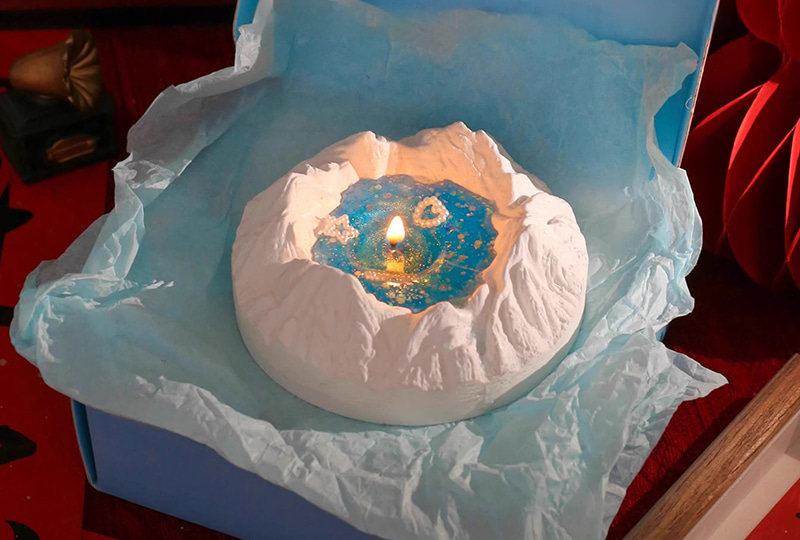
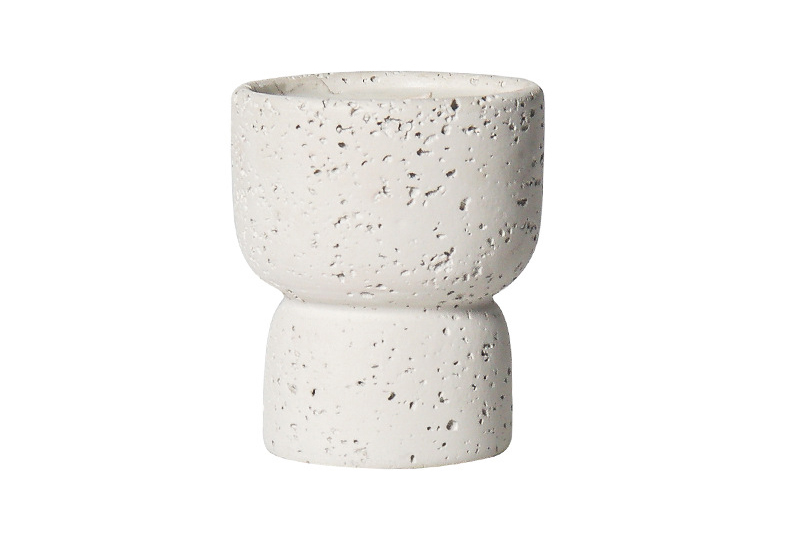 100-200g Volcanic Stone Cement Jar CandleWith a low container cost and a 100-200g fill, this cement jar candle fits the small-to-medium band where pricing stays a treat yet burn time feels substantial. Its porous volcanic-stone texture suits modern and Nordic interiors.View Product →
Above that, the large tier exists less for volume and more for positioning: it makes everything below it look reasonably priced, and it catches the buyer who wants the full-size experience of a scent they already trust.
Set each step at roughly 1.5 to 2 times the tier below it. At $16, $28 and $45, the medium reads as the sensible default and the large reads as a deliberate indulgence. If two sizes sit too close together — say $24 and $28 — most customers simply take the larger one and your small tier stops moving, which quietly defeats the purpose of the ladder. The small size is not really there to earn profit on its own; it exists to convert hesitant first-timers and to make the middle tier look reasonable.
Wax and fragrance oil scale with fill weight, but the lid, label, gift box and pick-and-pack labor barely change from one size to the next. That is why the largest candle in a range usually carries the best gross margin percentage even though its absolute unit cost is highest. It also explains the quiet danger of selling a single large format: a $45 entry price screens out everyone who came to browse. A substantial vessel at the top of the range, such as a 300 g soy candle in a glazed ceramic jar, gives the premium buyer something worth the climb.
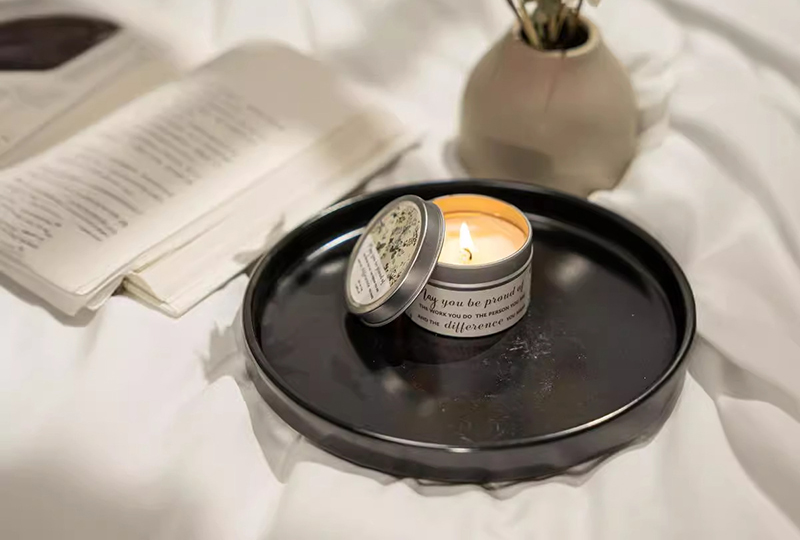
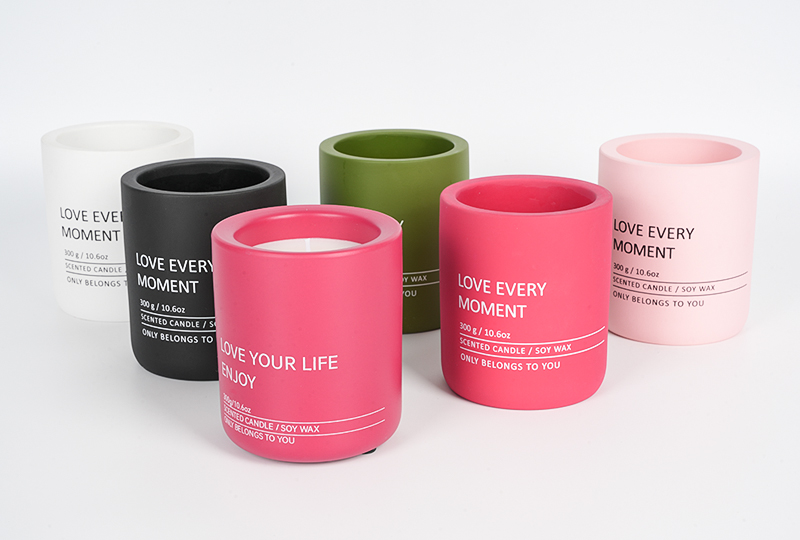 300g Soy Wax Scented Ceramic Jar CandleA substantial glazed ceramic vessel at the top of the range gives premium buyers a full-size option in a fragrance they trust, while the larger fill typically carries the best gross margin percentage in a candle lineup.View Product →
The same fragrance behaves like a different product at each size. Small formats — minis, travel tins, tealight sets — dominate gifting: wedding and baby-shower favors, corporate giveaway tables, holiday stockings. Tealights in particular sell in multipacks to restaurants, spas and event planners who need atmosphere in bulk rather than a centerpiece. Medium jars are the personal daily-burn size for bedrooms, bathrooms and home offices, while large jars belong to living rooms and open-plan spaces, and they photograph far better for social content.
Listing these occasions also tells you which sizes to add first. If customers keep asking for wedding favors, a tealight or mini rung will earn its place quickly; if nobody asks, that rung can wait another season.
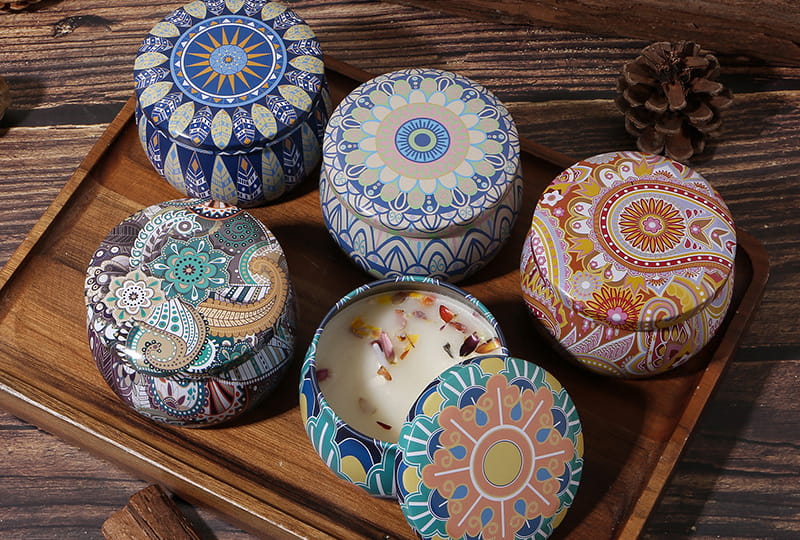
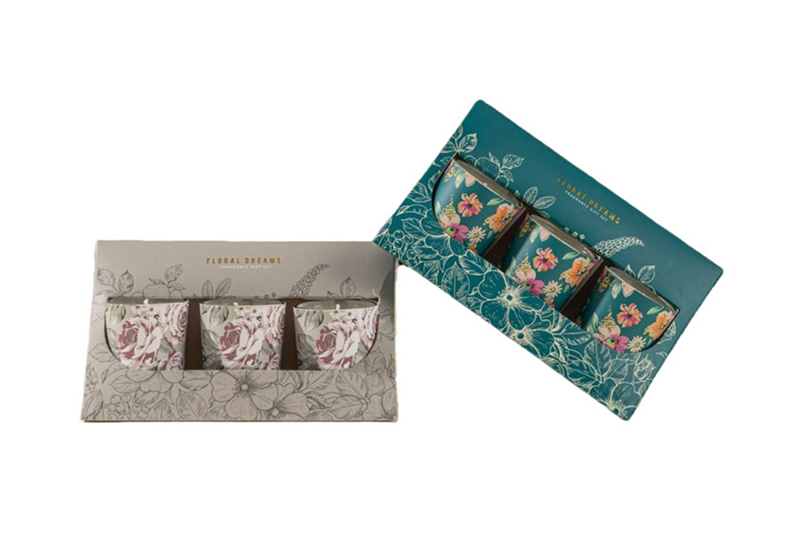 Floral Glass Tealight Candle Set Gift BoxTealight sets sell in multipacks for weddings, spas and events, and this floral glass set arrives gift-boxed and ready for favors or holiday gifting. Each patterned holder scatters a soft, decorative glow when lit.View Product →
Multiple sizes are not free. A wick is matched to the vessel diameter, not the wax weight, so every new size means new wick trials and several complete burn cycles — checking flame height, melt pool, tunneling and scent throw — before that SKU can ship. Labels, lids and shipping cartons must be reordered per size, and safety markings such as burn instructions have to be scaled to each vessel, so artwork revisions multiply faster than most makers expect.
For brands that source rather than pour, confirm the MOQ and lead time for each size before committing, because a size you cannot reorder within a season breaks the continuity that makes a range feel trustworthy. Vessel material matters here too, since cement, glass, ceramic and metal each behave differently in production, weight and shipping — our explainer on candle vessel materials walks through those differences.
A practical guardrail: add a fourth size only after the existing tiers sell through consistently for at least one full season. Splitting early into five sizes and three scents is the most common way young brands end up with cash locked in slow stock.
A size ladder also travels well into wholesale. Retail buyers plan shelf space by price point, and a range covering $15, $30 and $50 lets one proven scent occupy three positions in a store instead of one. If you would like to see how a full multi-size range looks in practice — from minis and tealight sets to statement jars, alongside gift sets built on the same logic — browse our scented candle catalog.

Room 1701, Building C1, Wangjing, Xiaoshan District, Hangzhou City, Zhejiang Province, China.

+86-15937257616

Copyright© 2026 Hangzhou Leo Home Trading Co., Ltd. All Rights Reserved.

Luxury Candles Home Fragrance Manufacturers Modern Candles Factory