 English
 Français
News
Home / News / Industry News / Custom Home Fragrance: How to Create Your Own Candle and Diffuser Line
Content
Ask any retailer or brand buyer who has sourced scented candles in volume, and they will tell you the same thing: the most reliable way to differentiate a home fragrance range is not a clever scent name, but a clear product specification. Custom home fragrance puts that specification in your hands. You decide the vessel, the wax, the wick, the scent strength, the label and the box, while your supplier handles sourcing, production and quality control. Done well, it turns an ordinary candle into a shelf-ready brand statement. Done poorly, it leads to inconsistent burns, leaking jars and returns that quietly eat your margin. This guide explains what custom home fragrance actually involves, where the real risks sit, and how to brief a supply partner so your first batch comes out right.
Custom home fragrance is broader than a private-label candle. It covers any scented product made to your specification: scented jar candles, shaped and sculptural candles, reed diffusers, refill bottles, ultrasonic or plug-in diffusers, scented tablets and combined gift sets. Most programmes start with one of two routes. In an ODM project, you choose from an existing range of vessels, scents and packaging options and add your own branding. In an OEM project, you develop a product from scratch, including a custom mold, a unique vessel and a fragrance formula built around your brief.
For most first-time buyers, the smart entry point is a refined ODM range. A good example is a matte lidded minimalist ceramic jar candle: it already carries a premium look, works with standard filling lines and needs almost no structural changes before you add your brand identity. You focus your budget on fragrance selection and packaging, which is where customers actually perceive value.
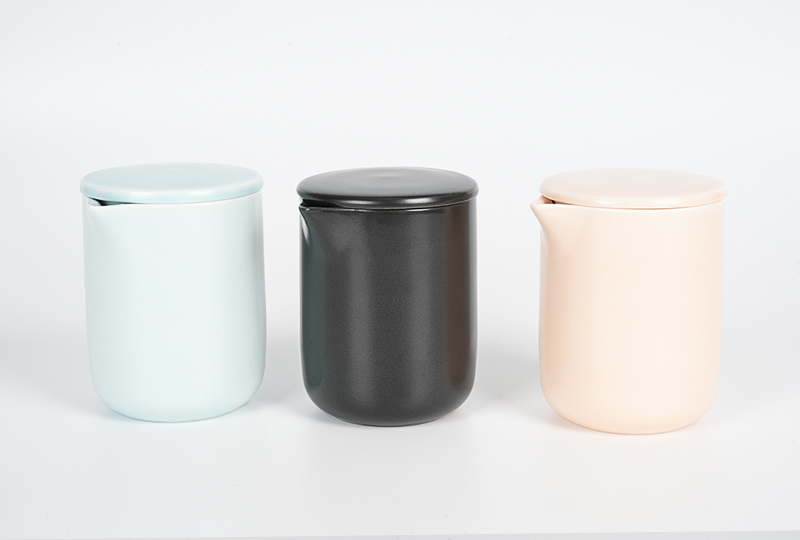 Matte Lidded Minimalist Ceramic Jar Candle Suppliers, Company - Hangzhou Leo HomLeo Home is Matte Lidded Minimalist Ceramic Jar Candle Suppliers and Company in China, Custom Matte Lidded Minimalist Ceramic Jar Candle ...View Product →
Every custom candle or diffuser is a bundle of decisions. Five of them have the greatest influence on cost, performance and consumer satisfaction.
Fragrance is the emotional core of the product and the hardest element to get right. Agree on the fragrance load in advance, usually 5–8% for candles and up to 20% for reed diffuser oil. Ask your supplier for the IFRA certificate and safety data sheet for every fragrance oil, and test the scent not only out of the box but also mid-burn and near the end of the candle. Oils that smell fine at the start can turn thin or sooty after two hours of burning.
The vessel defines both the look and the production cost. Glass, ceramic, cement, metal and marble all behave differently in filling, burning and shipping. The table below summarises the trade-offs you should review with your supplier before committing to a mold or a stock container.
| Material | Look and feel | Best suited for | Cost and risk notes |
|---|---|---|---|
| Glass | Transparent, modern, shows wax colour clearly | Mid-market candles, strong label design, gift sets | High design flexibility; needs sturdy packaging to avoid breakage |
| Ceramic | Heavier, artisan, premium | Tabletop decor, dining retail, luxury gift lines | Higher unit cost; natural glaze variation between batches |
| Cement | Matte, textured, sculptural | Trend-led ranges, minimalist interiors | Porous; requires proper inner sealing to prevent oil leakage |
| Metal | Durable, compact, travel-friendly | Tins, outdoor use, multi-packs | Heat transfers faster; coating can scratch in transit |
If you want to understand the production implications in more detail, our guide to candle vessel materials explains how each option affects filling, curing and shipping.
Wax choice is a brand and performance decision. Soy wax offers a clean image and good scent throw at moderate cost, while coconut or beeswax blends raise the premium feel, and paraffin blends often deliver stronger hot throw at a lower price. The wick is equally important. Cotton wicks give a clean, stable flame; wooden wicks create a crackling sound and a larger flame that suits rustic or luxury positioning. Before locking your formula, run a burn test: evenly melt the wax, keep the flame at a sensible height, and check for mushrooming, soot and tunnelling across the full life of the candle.
Buyers often confuse cold throw with hot throw. Cold throw is how the candle smells before lighting; hot throw is how it performs during burning. Both matter, but they are controlled by different factors, including fragrance load, wax type, wick size and vessel diameter. Specify the intensity you want in both conditions and ask for a burn test at multiple wick sizes.
Custom home fragrance is rarely sold as a naked jar. Labels, lids, shrink bands, inner boxes and gift sleeves all affect the shelf impression and the logistics cost. Recyclable cardboard, soy-based inks and minimal plastic are increasingly expected by institutional buyers in Europe and North America. Confirm packaging dimensions early, because they determine carton size, shipping volume and ultimately your landed cost per unit.
A single custom candle can launch a brand, but a balanced mix builds repeat sales. Scented candles are the hero product, while reed diffusers offer continuous home fragrance without a flame. That combination is powerful: a customer buys a candle for a gift, then comes back for a reed diffuser for the bedroom or office. It also spreads your production across different sourcing categories, which lowers dependency on one mold or one vessel.
One practical way to test the mix is to start with coordinated candles and diffusers in the same scent family. An amber glass reed diffuser with a wooden cap, for example, is a low-risk item that shares the same fragrance story as your candle line and adds a cleaner, longer-lasting option for customers who prefer flame-free rooms. A matching refill programme can then create predictable repeat purchases. If you want to see a full set of options for this category, browse our reed diffuser range and compare bottle sizes, cap styles and refill formats before you commit.
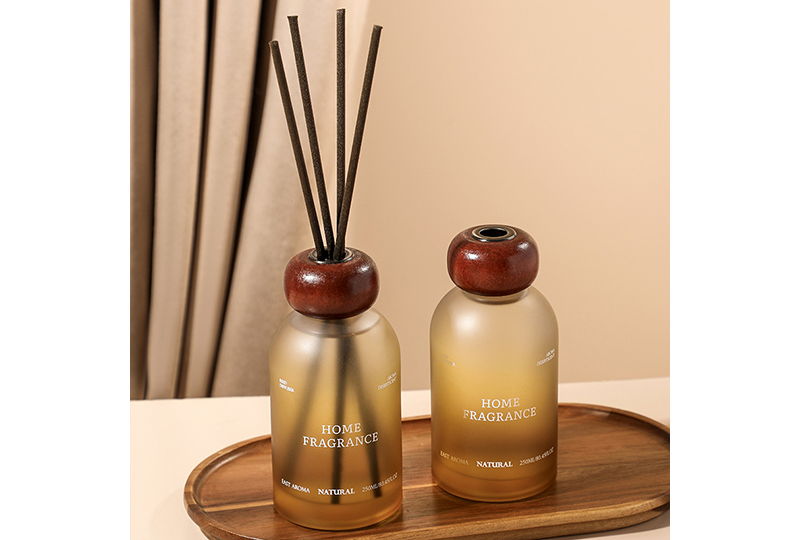 Amber Glass Wooden-Cap Natural Aroma Reed Diffuser Suppliers, Company - HangzhouLeo Home is Amber Glass Wooden-Cap Natural Aroma Reed Diffuser Suppliers and Company in China, Custom Amber Glass Wooden-Cap Natural Arom...View Product →
Gift sets should be considered from the beginning, not added after the line is finished. Retail buyers routinely ask for sets at holiday peaks, and a pre-planned combination of a candle and a diffuser in a branded box is far easier to execute when both products already share the same design language.
Quality issues in home fragrance usually appear in three places: fragrance safety, burn behaviour and vessel integrity. For a custom program, request the following from your supplier before production:
A reliable partner will not treat these documents as extras. They are the difference between a smooth launch and a costly recall. In our experience with cross-border home fragrance sourcing, the suppliers who openly share test data and explain their quality control process are also the ones who deliver on time. Our own team applies the same discipline, with checks from raw material selection to finished product inspection before anything leaves the warehouse.
The path from an idea to a finished batch is straightforward if you follow a structured sequence. Most successful programmes move through the following stages:
At this stage, some buyers also validate a gift concept. An aromatherapy candle and reed diffuser collection gift set bundles the two hero stock-keeping units into one branded package, giving you holiday-ready inventory without a separate design programme.
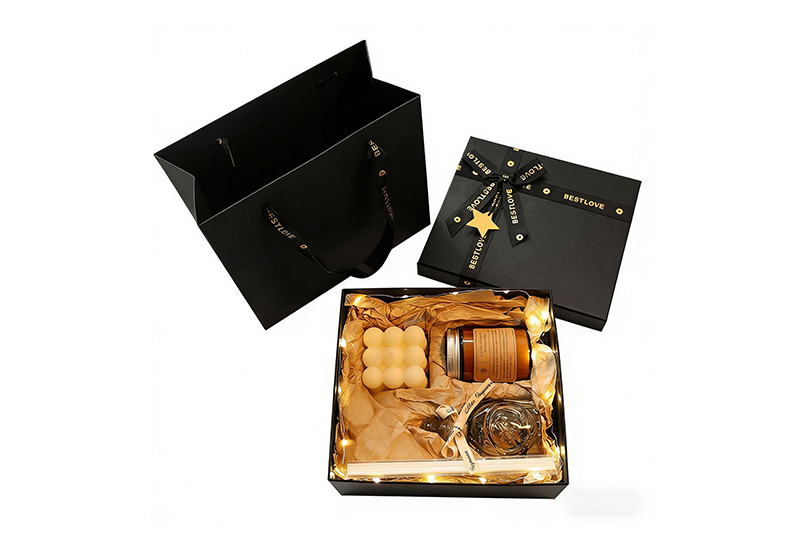 Aromatherapy Candle & Reed Diffuser Collection Gift Set Suppliers, Company - HanLeo Home is Aromatherapy Candle & Reed Diffuser Collection Gift Set Suppliers and Company in China, Custom Aromatherapy Candle & Reed Dif...View Product →
When briefing suppliers, choose a partner who can show both finished products and raw materials. A company that trades across waxes, vessels, wicks and oils can adjust a specification without splitting the project across multiple vendors. That is why our scented candle collection is supported by the same in-house sourcing team that handles our diffuser line, so custom programmes stay consistent from fragrance to final carton.
Custom home fragrance is not a single purchase; it is a specification, a compliance package and a supply chain. The brands that launch successfully treat it that way. They decide the consumer experience first, then pressure-test the fragrance, vessel, wick and packaging with data. They also choose a partner with the category depth to answer questions about burn behaviour, material compatibility and shipping protection rather than just taking an order.
If you are planning your own custom candle, diffuser or gift set programme, start with a clear product brief and a shortlist of realistic vessel options. The right specification, built on testable details, is what separates a home fragrance line that sells from one that only looks good in a sample photo.

Room 1701, Building C1, Wangjing, Xiaoshan District, Hangzhou City, Zhejiang Province, China.

+86-15937257616

Copyright© 2026 Hangzhou Leo Home Trading Co., Ltd. All Rights Reserved.

Luxury Candles Home Fragrance Manufacturers Modern Candles Factory