 English
 Français
News
Home / News / Industry News / How Reed Diffusers Work: Capillary Action, Fragrance Release, and Sourcing Tips
Content
Placing a fresh reed diffuser in a showroom and checking it three weeks later reveals a thinner scent. Flip the reeds and it comes back for a while. This is not magic—it is capillary action plus passive evaporation. A reed diffuser is a heatless fragrance delivery system that lasts for weeks, and everything about how it performs depends on the sticks, the oil, and the environment.
Reed diffusers work through two physical processes: capillary action and evaporation. The reeds contain microscopic channels running vertically along their length. When the bottom of a reed is immersed in fragrance oil, the liquid is drawn upward because the adhesive forces between oil molecules and the reed material are stronger than the cohesive forces inside the liquid.
At the top of the reed, the oil is exposed to air. Volatile fragrance molecules leave the liquid surface and become vapor. This evaporation reduces the concentration of oil at the top, so capillary action keeps pulling fresh oil upward. The process continues as long as there is oil in the bottle and a dry surface at the top. That is why a reed diffuser works without a flame, a heating element, or a battery.
The porosity of the reed determines how efficiently this cycle works. Natural rattan has a spongy core with many tiny cavities, which makes it an easy path for oil to travel. Synthetic fiber reeds are extruded with controlled internal channels, providing a more consistent flow. The larger the exposed surface area at the top, the faster the scent evaporates, but the quicker the oil is consumed. This is the central trade-off every buyer needs to understand.
A new reed diffuser often smells faint for the first few hours or even a day. The reeds need to soak up oil and become fully saturated before a steady scent flow begins. After the reeds are wet, fragrance intensity is determined by how many sticks are used, the diameter of each stick, and the evaporation rate at the top.
After a week or two, the scent may weaken even though the bottle still has plenty of oil. The top of the reed becomes dry enough that the fragrance evaporates less readily, and the soaked oil at the top has already evaporated. Turning the reeds puts the fresh, oil-soaked end on top, which immediately restores the scent throw. The downside is that flipping also exposes a new wet surface, so the oil is consumed faster. A common recommendation is to flip one or two reeds every few days, not all of them at once, to balance intensity and longevity.
Environmental conditions matter too. In a warm, dry room with air circulation, a reed diffuser will release more scent but run out sooner. In a cool, humid space, it will last longer but smell less.
When you are sourcing reed diffusers, the choice of stick material has a direct impact on performance, consistency, and cost. Rattan reeds are natural and visually organic, but they can vary from stick to stick. Fiber reeds are engineered to have a uniform pore structure, which tends to deliver more predictable scent output.
| Factor | Fiber reeds | Rattan reeds |
|---|---|---|
| Draw speed | Even and controllable | Natural but variable |
| Fragrance consistency | High | Moderate |
| Durability | Does not rot or soften | May degrade with aggressive oils |
| Appearance | Available in colors and finishes | Woody, rustic texture |
| Cost | Often higher per stick | Lower per stick |
For private label programs, fiber reeds offer a more professional and consistent experience, especially when the fragrance oil contains ingredients that can break down natural wood. They also allow for brand color matching.
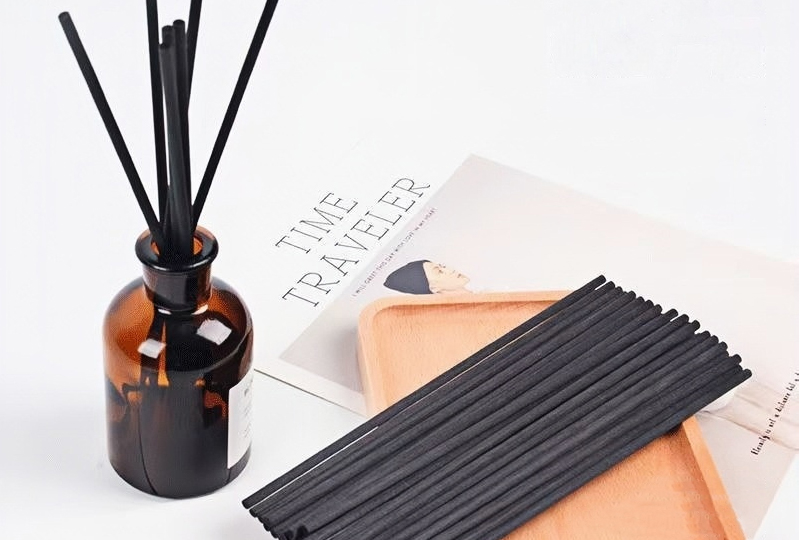 Black Fiber Reed Diffuser Sticks for Steady Aroma ReleaseThese black fiber reed sticks absorb and diffuse fragrance oils efficiently, delivering a consistent scent. They are designed for private label programs and allow color matching to enhance brand appeal.View Product →
Reed diffuser performance is not just about the sticks. The base solvent, fragrance oil concentration, bottle neck size, and closure type all affect how the product behaves in shipping and in a customer's home. Before you place a bulk order, check these four points.
It is also worth confirming that the supplier can provide a complete range: bottles, sticks, refill oil, and packaging.
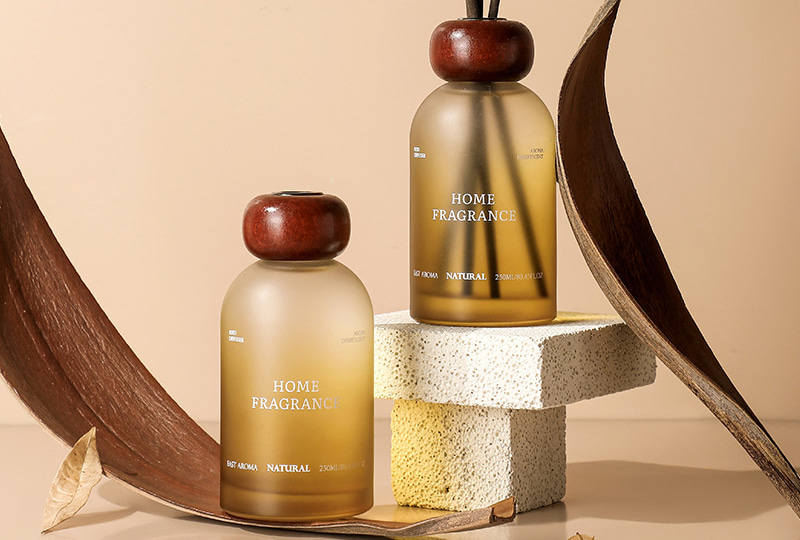
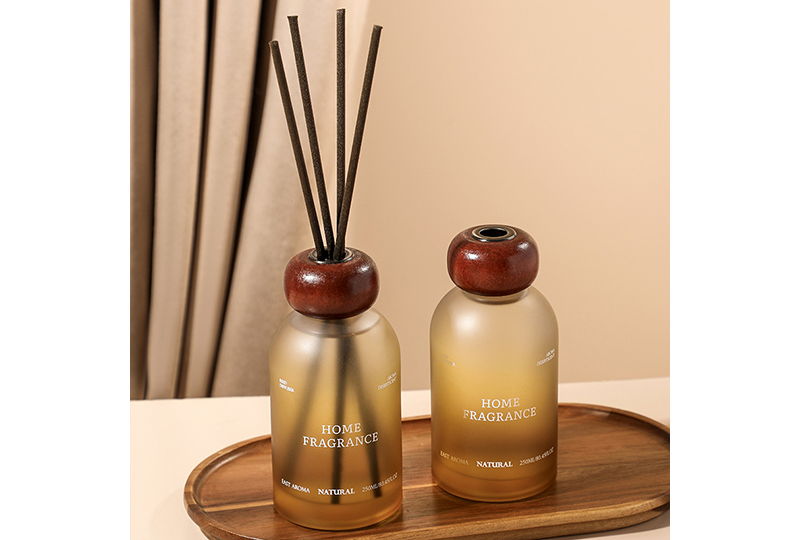 Amber Glass Wooden-Cap Natural Aroma Reed DiffuserThis diffuser features an amber glass bottle and wooden cap, offering a refined natural scent for 2–3 months. Its minimalist design suits modern home décor and provides a ready-to-sell product without candle-making complexity.View Product →
Reed diffusers are one of the easiest home fragrance categories to customize. You can choose the bottle shape and color, the wooden or metal cap, the stick material, and the fragrance itself. The unit is not burned, so there is no jar residue or wick tuning issue. This makes the category especially attractive for brands that want a ready-to-sell product without the complexity of candle making.
A reliable supplier should be able to help you through the entire process: selecting a diffuser base and fragrance load, testing the reed draw speed, controlling the final scent strength, and packaging the set so it arrives intact. For OEM and ODM orders, the supplier also needs to support custom mold development, color matching, and label applications. Before committing, review the factory's quality control process: they should inspect raw materials, check the fill volume, verify the seal, and run a burn-for-duration test on representative samples.
In our own supply chain, we use a control system that covers product development, international purchasing, and cross-border marketing support. This means every custom order is documented from the initial fragrance selection to the final pallet.
Home fragrance trends for 2026 show that buyers are increasingly asking for more sustainable, long-lasting products, and reed diffusers fit that direction because they contain no disposable electronics and are largely refillable.
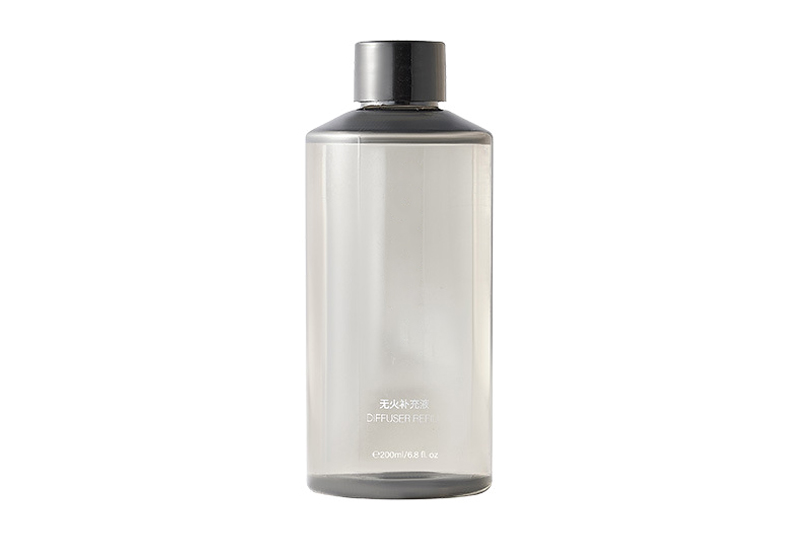 200ml Aromatherapy Reed Diffuser Refill OilThis 200ml refill oil replenishes reed diffusers with six fragrance choices, providing an economical and long-lasting solution. It supports sustainable home fragrance practices and is available in retail cartons of 32 bottles.View Product →
Reed diffusers are not complicated machines. They are a practical application of capillary action and controlled evaporation. Understanding how they work allows you to make better decisions about stick selection, fragrance load, and packaging. It also helps you set realistic expectations with your customers: the scent will not be as intense as a burning candle, but it will be present for weeks without any ongoing attention.
If you are sourcing reed diffusers for a retail line or a private label project, keep this guide in mind. The right combination of base, fragrance, stick, and bottle will determine how well your product performs in a real room—and how low your return rate will be.

Room 1701, Building C1, Wangjing, Xiaoshan District, Hangzhou City, Zhejiang Province, China.

+86-15937257616

Copyright© 2026 Hangzhou Leo Home Trading Co., Ltd. All Rights Reserved.

Luxury Candles Home Fragrance Manufacturers Modern Candles Factory