 English
 Français
News
Content
- 1 2027 Home Fragrance Market: The Numbers That Matter
- 2 Trend #1: Grown‑Up Gourmands — Beyond Vanilla
- 3 Trend #2: Functional Fragrance — Scent as a Service
- 4 Trend #3: The Aesthetic Vessel — Packaging as the Product
- 5 Trend #4: Sustainable by Design — Refillables & Biodegradables
- 6 Trend #5: The Rise of Smart Diffusers — Tech Meets Scent
- 7 Seasonal Sourcing Calendar — When to Order for 2027
- 8 How to Choose Your 2027 Product Mix — A Decision Framework
2027 Home Fragrance Market: The Numbers That Matter
By the time your next holiday order ships, the global home fragrance market will have grown by another $2.6 billion. The sector is on track to reach $9.7 billion in 2027, expanding at a 5.3% CAGR. That headline number sounds promising — but category-level growth rates tell a much sharper story. Scented candles, for instance, are accelerating faster than room sprays. Reed diffusers are stealing share from electric plugins. Retailers who stock by broad averages risk missing where the margin actually lives.
North America still commands over 30% of global consumption, yet the fastest growth is shifting to Asia‑Pacific and the Middle East. For procurement teams, that means what sells in Dallas won’t automatically move in Dubai. The two forces reshaping the retail landscape right now are premiumization and functionality. Consumers are spending more per unit, but they’re also expecting the product to do something — help them sleep, focus, or signal a design ethos.
| Product Category | 2022 Revenue (USD B) | 2027 Revenue (USD B) | CAGR |
|---|---|---|---|
| Scented Candles | 3.2 | 4.4 | 6.6% |
| Reed Diffusers | 1.8 | 2.6 | 7.6% |
| Room Sprays | 1.1 | 1.3 | 3.6% |
| Electric/Warmers | 0.9 | 1.1 | 4.1% |
| Smart Diffusers | 0.15 | 0.35 | 18.5% |
Scented candles remain the largest segment, but reed diffusers and smart diffusers are growing much faster. Smart devices, though tiny in absolute revenue, will nearly double their market footprint by 2027. That’s a gap many mid‑market retailers haven’t filled yet. The next sections translate these numbers into concrete stocking decisions.
Trend #1: Grown‑Up Gourmands — Beyond Vanilla
Vanilla candles are not disappearing. But the next wave of gourmand fragrances reads more like a cocktail menu than a bakery case. Salted caramel, smoked honey, espresso bean, and spiced fig are the profiles moving through boutiques and hotel lobbies in 2027. Think of it as “gourmand with a liquor cabinet” — scents that evoke warmth and indulgence without tipping into cloying sweetness.
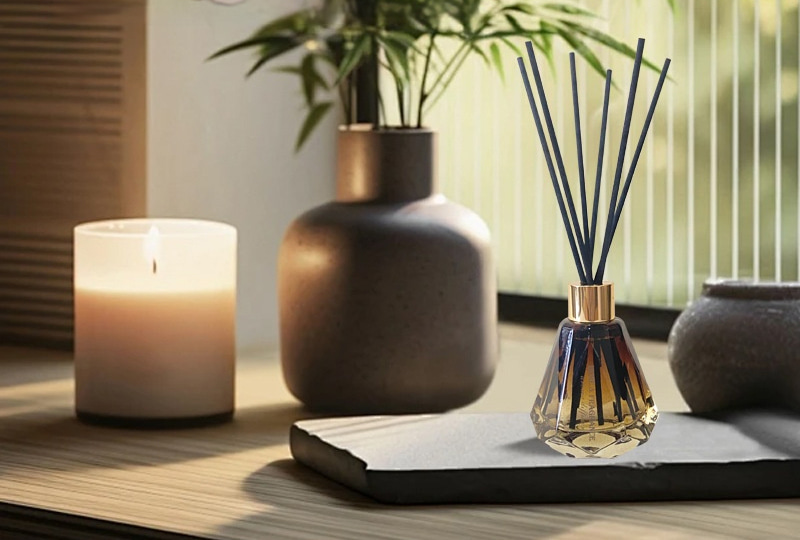
The data backs the shift. Mintel’s fragrance trackers show that consumers under 40 are 37% more likely to buy a “complex” sweet scent than a straightforward vanilla or cookie dough. When you stock for this trend, think in layers. A jasmine‑ and honey‑blended scented candle in a matte vessel reads far more premium than a single‑note brown sugar jar. For diffusers, combinations like cardamom‑brown butter or saffron‑crème brûlée perform exceptionally well in the $18–35 gift range.
Five gourmand blends worth ordering for 2027:
- Smoked bourbon and maple — ideal for masculine‑leaning lifestyle stores
- Black tea and burnt peach — bridges gourmand and fresh categories
- Roasted chestnut and clove — a cold‑weather staple that crosses into Christmas
- Salted pistachio and rose — a Middle Eastern‑influenced profile growing in demand
- Caramelized banana with cedarwood — quirky enough for TikTok, sophisticated enough for tabletop display
Gourmand scents now command a 22% higher average retail price than standard floral or citrus lines in specialty retail. That margin uplift alone makes them worth the shelf space, provided the packaging matches the complexity inside.
Trend #2: Functional Fragrance — Scent as a Service
Customers no longer buy a candle just to make the room smell nice. They want it to wind down their nervous system after a 12‑hour shift, or to sharpen focus during a home‑office deep‑work block. This is functional fragrance, and it’s one of the fastest‑growing sub‑categories in home scent — projected to grow at over 9% annually through 2027.
Retailers need to treat these products not as décor but as wellness tools. The claim on the label matters as much as the scent itself. “Sleep,” “Focus,” “Energy,” and “Calm” are the four functional pillars. Within each, the fragrance profile acts as a delivery mechanism: lavender‑chamomile for sleep, peppermint‑eucalyptus for energy, vetiver‑sandalwood for calm.
| Product Type | Typical Wholesale Cost | Suggested Retail Price | Gross Margin | Repeat Purchase Driver |
|---|---|---|---|---|
| 8 oz Sleep Candle (lavender‑chamomile) | $4.20 | $19.99 | 73% | Burn time / therapeutic effect |
| 3.4 oz Focus Reed Diffuser (rosemary‑mint) | $3.80 | $16.99 | 71% | Refill oil availability |
| 6 oz Calm Room Spray (sandalwood‑bergamot) | $2.10 | $12.49 | 75% | Fast consumption, reorder within 45 days |
| Smart Diffuser Starter Kit (with 3 functional oils) | $18.00 | $39.99 | 55% | Lock‑in via proprietary oil refills |
The real profit lever for functional fragrance isn’t the initial sale — it’s the refill ecosystem. Retailers who pair a reed diffuser with prepackaged oil refills see twice the customer lifetime value compared with one‑off purchases. Stocking a “Sleep” collection that includes a candle, a reed diffuser, and a room spray can triple basket size with minimal shelf complexity.
Trend #3: The Aesthetic Vessel — Packaging as the Product
Walk through any home décor trade show in 2026 and you’ll notice one thing: the vessel is the hero. A candle is no longer just wax and wick. It’s a ceramic sculpture, a concrete monolith, a ribbed glass apothecary jar. Consumers are buying refillable containers that outlast the original scent — and retailers who miss this are leaving a permanent display opportunity on the table.
The numbers are straightforward. A candle jar made of textured stoneware can retail for $28 instead of $16 for an equivalent wax fill in a plain glass tumbler. The perceived value jump far exceeds the incremental cost. And once the candle is gone, the jar lives on as a vanity organizer or planter, keeping your brand visible for months.
Three vessel trends driving 2027 buying decisions:
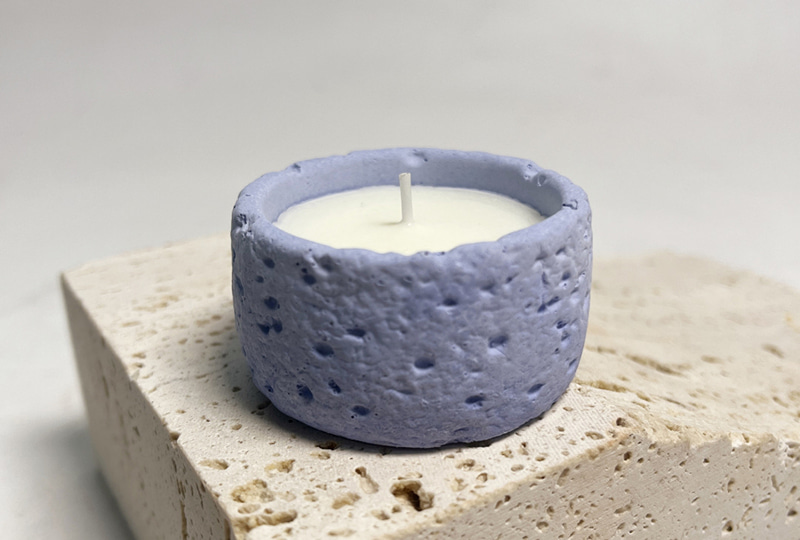
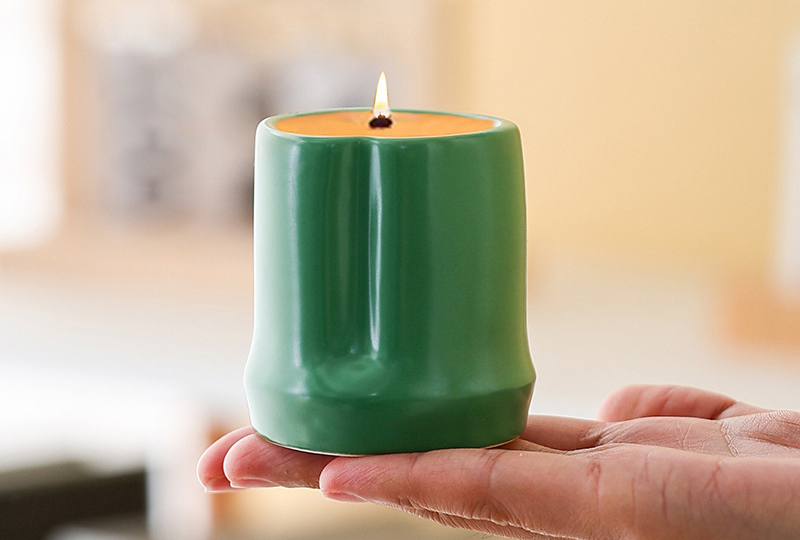
- Matte ceramic — pastel and earth tones dominate. Wholesale cost $1.20–$2.50 per unit. Ideal for “clean luxury” collections.
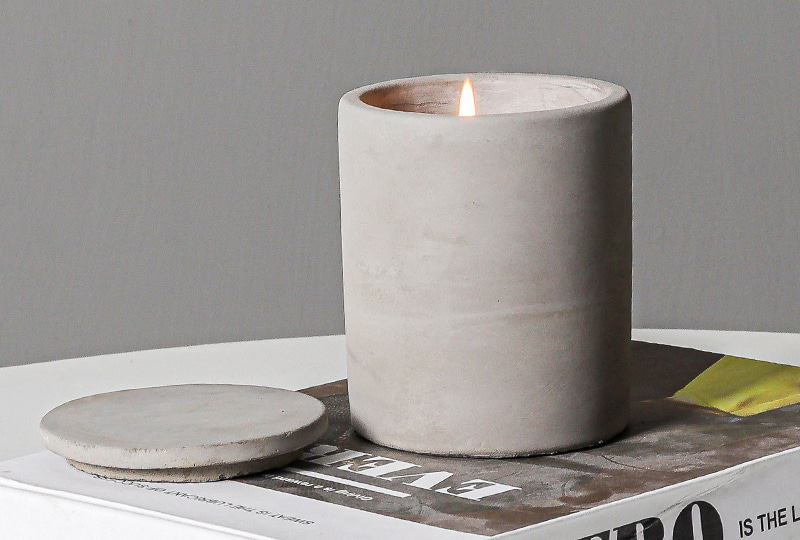
- Cement / concrete — industrial yet warm. Cost $0.80–$1.50 per unit. Best for gender‑neutral, minimalist brands. Requires protective felt base.
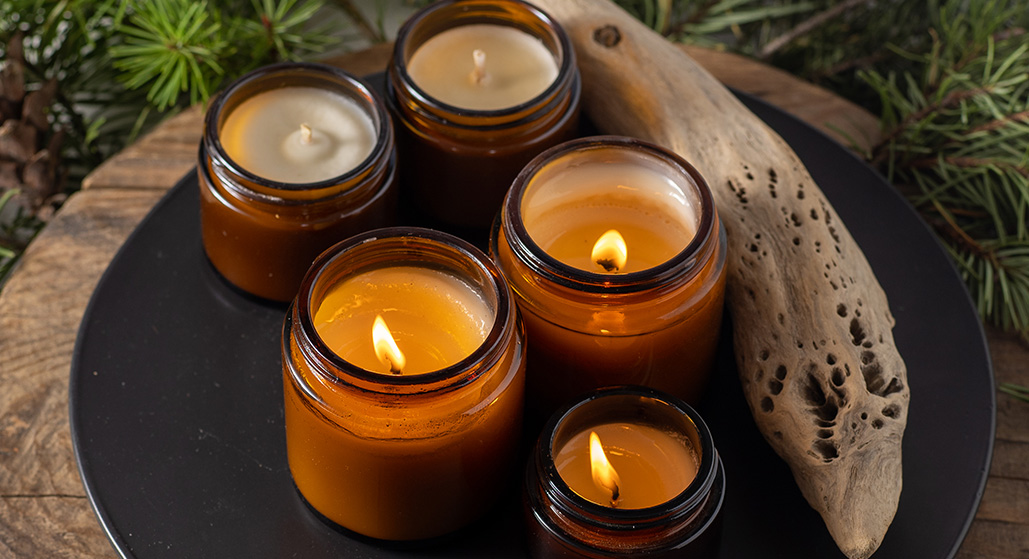
- Amber glass — vintage apothecary revival. Cost $0.60–$1.10 per unit. Performs well in “wellness” and “sustainable” lines. UV protection extends oil life for diffusers.
Vessels with high “post‑burn utility” generate 40% more social media shares than disposable containers. That earned exposure is a cost‑effective acquisition channel you can’t ignore. When you order for 2027, ask the manufacturer for a specification sheet that includes reuse ideas — it’s a small detail that can be turned directly into point‑of‑sale copy.
Trend #4: Sustainable by Design — Refillables & Biodegradables
Sustainability in home fragrance has graduated from a marketing claim to a purchasing prerequisite. By 2027, over 60% of buyers in the $25+ gift segment will actively seek products labeled “refillable” or “biodegradable,” according to multiple consumer surveys. The retailers who treat this as a feature — not a fringe — will capture that discretionary spend.
Three ready‑to‑order sustainable formats:
- Refillable glass reed diffusers — sell the bottle once, then offer fragrance oil refills in lightweight pouches. This cuts shipping weight and packaging by 70%. Explore options at reed diffuser and accessories for customizable sets.
- Soy‑coconut‑beeswax blend candles — eliminate palm oil. The 100% natural blend burns cleaner and holds scent throw better than paraffin, all while carrying a stronger eco‑story. Wholesale cost is only $0.30 higher per unit, easily absorbed by the 15% premium consumers willingly pay.
- Pulp inner‑trays and zero‑plastic boxes — molded fiber inserts have replaced plastic trays for many mid‑to‑high end sets. They’re compostable, lightweight, and drop into existing gift box dimensions without redesign.
Products in refillable formats generate an average repeat purchase rate of 62%, nearly double that of single‑use items. This trend is also one of the few that lowers your long‑term carbon footprint while increasing lifetime customer value — a rare win‑win in retail procurement.
Trend #5: The Rise of Smart Diffusers — Tech Meets Scent
Smart home fragrance devices are the smallest category in the market — but the fastest moving. With a projected CAGR above 18%, these app‑controlled, nebulizing diffusers are transforming the way hotels, luxury rental properties, and tech‑forward households engage with ambient scent.
The unit economics are different from anything else in your catalog. A standard passive reed diffuser sells for $12–$18 and has minimal re‑engagement. A smart diffuser, loaded with a starter kit of three essential oil blends, retails at $39–$59. The real value, however, lies downstream. Proprietary oil cartridges, sold on subscription or as refill packs, lock in repeat revenue at a 55–65% gross margin. That’s a razor‑and‑blade model in a category that has historically been one‑and‑done.
| Factor | Smart Diffuser | Traditional Reed Diffuser |
|---|---|---|
| Average wholesale cost | $18 – $50 | $3 – $10 |
| Retail price | $39 – $99 | $12 – $28 |
| Margin (hardware) | 45 – 55% | 55 – 75% |
| Repeat purchase model | Oil cartridge refills (high retention) | Replenishment of entire unit (low retention) |
| Inventory risk | Electronics — potential returns, firmware updates | No expiry; stable inventory |
| Best retail channel | Amazon, DTC website, high‑end gift shops | Etsy, boutiques, supermarkets, gift sets |
| Target customer | Tech‑savvy, 25–45, wellness‑focused | Broad demographic, home décor enthusiasts |
Smart diffusers offer lower upfront margins but significantly higher customer lifetime value due to refill lock‑in. For retailers with a strong digital or subscription infrastructure, they represent the highest‑potential new SKU for 2027. For those selling primarily through shelf display, traditional formats still deliver faster turns and simpler cash flow.
Seasonal Sourcing Calendar — When to Order for 2027
Timing can make or break a seasonal home fragrance program. Ocean freight from major production hubs in Southeast Asia typically takes 45–60 days, plus customs clearance. Air freight cuts that to two weeks but triples cost. That means your 2027 holiday assortment should be finalized no later than June 2027. Here’s a month‑by‑month procurement roadmap.
| Holiday / Season | Recommended Scents | Product Formats to Stock | Latest Order Deadline |
|---|---|---|---|
| Valentine’s Day (Feb 14) | Rose & oud, champagne & raspberry, vanilla bean | Heart‑shaped candles, small reed diffuser gift sets, room sprays | September 15, 2026 |
| Mother’s Day (May) | Peony & lychee, white tea & ginger, fresh linen | Ceramic jar candles, floral diffuser set, spa‑inspired kits | December 15, 2026 |
| Fall / Halloween (Sept‑Oct) | Pumpkin chai, smoked cinnamon, vanilla bourbon | Matte ceramic candles, wax melts, decorative reed diffusers | May 1, 2027 |
| Christmas (Dec) | Fresh pine, gingerbread, clove & orange, frosted berry | Large 3‑wick candles, gift sets with wooden lids, crackling wooden wicks | June 30, 2027 |
Christmas 2027 demand will be shaped by the previous year’s TikTok trends. If a “woodland cabin” aesthetic or a specific candle shape goes viral in late 2026, your production lead time needs to absorb that signal. Building in a 10% buffer of blank, unbranded ceramic vessels can let you apply decals or seasonal sleeves quickly, reacting to social momentum without a full manufacturing run.
How to Choose Your 2027 Product Mix — A Decision Framework
No retailer can stock every trend. The key is to match a product mix to your channel’s margin structure, customer tolerance for risk, and operational capacity. Below are three distinct playbooks, drawn from working with mid‑market to premium home fragrance buyers.
| Profile | Typical SKU Count | Avg Unit Cost | Target Margin | Channel Fit | Core Categories |
|---|---|---|---|---|---|
| Mass Market Mix | 40 – 60 | $2.80 | 55 – 65% | Amazon, discount retail | Soy blend candles, simple reed diffusers, room sprays |
| Premium Gift Mix | 20 – 35 | $6.20 | 60 – 70% | Etsy, boutique, DTC | Ceramic jar candles, functional scent sets, refillable diffusers |
| Seasonal Hit Mix | 10 – 15 (skip‑step quarterly) | $4.50 | 50 – 60% (first run), 70% (repeat) | TikTok Shop, pop‑ups, flash sales | Shape candles, themed gift boxes, limited‑edition vessels |
A mass‑market retailer can test gourmand or functional scents with a single SKU in a best‑selling vessel format and scale if sell‑through exceeds 80% in 30 days. A premium boutique, on the other hand, should lead with a visual story — a collection of four ceramic diffusers in a coordinated color palette, backed by an influencer seeding campaign. The seasonal hit operator thrives on speed: order small batches of trend‑responsive product and aim for a 90‑day cash‑to‑cash cycle.
Start with a single “anchor” trend that aligns with your brand voice, then layer in a seasonal pilot. A bookstore‑café with a cozy atmosphere, for example, would anchor on grown‑up gourmands (smoked honey, chestnut) and pilot a holiday tabletop candle set in November. The data you collect from that small‑batch test will make your 2028 buying decisions nearly automatic.