 English
 Français
News
Home / News / Industry News / Are Reed Diffusers Safe? A Practical Guide to Home Fragrance Risks and Tips
Content
Few home fragrance products work as quietly as a reed diffuser: a small bottle of scented oil, a bundle of reeds, and a scent that drifts through a room for weeks without a flame, a wick, or a plug. It is easy to see why hotels, spas, and gift retailers treat them as a staple of the fragrance aisle.
It is also easy to see why the question "are reed diffusers safe?" keeps coming up. Unlike a candle there is no smoke and no open fire, but there is still a liquid fragrance evaporating into the air you breathe, day after day, in the same room where you sleep. That deserves a straight answer rather than a marketing one.
Yes, reed diffusers are generally safe when they are used as intended. They are sold as consumer fragrance products rather than hazardous chemicals, and they sit on desks and windowsills all over the world without incident.
That said, "safe" is not a property of the bottle alone. It depends on four things:
Get those four right and a reed diffuser is about as low-risk as home fragrance gets. Get them wrong and you can end up with headaches, irritated eyes, a stained sideboard, or a sick cat.
Most reed diffusers are a three-part system: a fragrance concentrate, a carrier liquid that controls how fast the scent is released, and the reeds that pull the liquid upward. Essential oils may appear alongside the concentrate, but they are rarely the whole story, because pure plant oils evaporate too quickly to scent a room for a month.
| Component | Typical role | What to check |
|---|---|---|
| Fragrance concentrate | Supplies the scent and the named notes | Phthalate-free declaration and an allergen list on request |
| Carrier solvent | Carries fragrance up the reeds and releases it slowly | Ethanol blends are flammable; slower carriers suit small rooms better |
| Aromatic plant oils | Natural scent and a cleaner marketing story | Some irritate skin and airways, and several are unsafe around cats and birds |
| Reeds | Wick liquid upward by capillary action | Low-density reeds clog within days and give an uneven scent throw |
The carrier is the part most shoppers overlook. Dipropylene glycol and isopropyl myristate are the two most common choices, and both evaporate slowly and predictably, which is why a good diffuser lasts six to ten weeks. Ethanol blends throw scent further and feel stronger on day one, but they fade faster and need more care around heat.
Three concerns come up again and again: phthalates, volatile organic compounds, and whether a diffuser can cause cancer.
Phthalates were once widely used as fixatives to make a scent linger. Some are associated with hormonal effects at high exposure, which is why many fragrance houses now offer phthalate-free versions as standard. Ask for that declaration in writing, because it is a formulation choice rather than a legal requirement in every market.
Every scented product releases VOCs, since that is what smelling actually is. In a reed diffuser the main ones are terpenes such as limonene, linalool, and pinene. Published research on diffuser emissions has found that these can irritate the eyes, nose, and skin when concentrations build up over hours or weeks in a closed room. In a ventilated living space the levels stay low; in a sealed bedroom with three diffusers running at once, they do not.
There is no established evidence that using a reed diffuser as directed causes cancer. The realistic risks are irritation, sensitisation, and headaches. Anyone with asthma or a fragrance allergy should treat a new diffuser as a trial: start in a large room, keep the door open, and stop if symptoms appear.
Bedrooms matter most, because you spend six to nine hours there with the door closed. A diffuser that feels pleasant at seven in the evening can feel heavy at two in the morning. If you want scent in a bedroom:
Bathrooms and hallways are more forgiving, though humidity means the bottle should never sit on a wet ledge. Cars are best avoided, since a small closed cabin concentrates everything. If you would rather have scent with no standing liquid at all, waterless and ultrasonic diffusers are a popular alternative for bedrooms and offices.
This is where the most caution is warranted, and it is why many buyers now ask for a full ingredient breakdown before placing an order.
Cats are the most vulnerable animals in a scented home. Their liver clears many plant compounds poorly, so terpenes and phenols that are harmless to humans can build up in their system. Citrus, tea tree, peppermint, eucalyptus, pine, wintergreen, and cinnamon are the usual suspects. Watch for drooling, vomiting, wobbliness, or unusual lethargy, and call a vet if a cat walks through spilled oil.
Dogs are more tolerant but not immune, and a small dog in a small room receives a higher dose than a large dog in an open-plan living room. Birds and small mammals have very sensitive respiratory systems, so a diffuser in the same room can be enough to cause distress.
No flame is a genuine advantage in a house with toddlers. The liquid is a different matter: bottles tip, reeds poke, and fragrance oil on skin or in eyes is painful. Keep the diffuser on a high shelf and never decant oil into an unlabelled bottle.
A reed diffuser has no flame, so fire risk is very low, but it is not zero. Some formulas contain ethanol or isopropyl alcohol, and all fragrance oils are combustible in principle, so keep the bottle away from candles, stovetops, heaters, and direct sunlight.
Spills are the likelier problem. Fragrance oil strips varnish, marks paint, stains fabric, and eats into plastic. Set the bottle on a tray, flip reeds over a sink, and wipe drips immediately.
Most safety problems come down to routine rather than chemistry. These habits cover nearly everything:
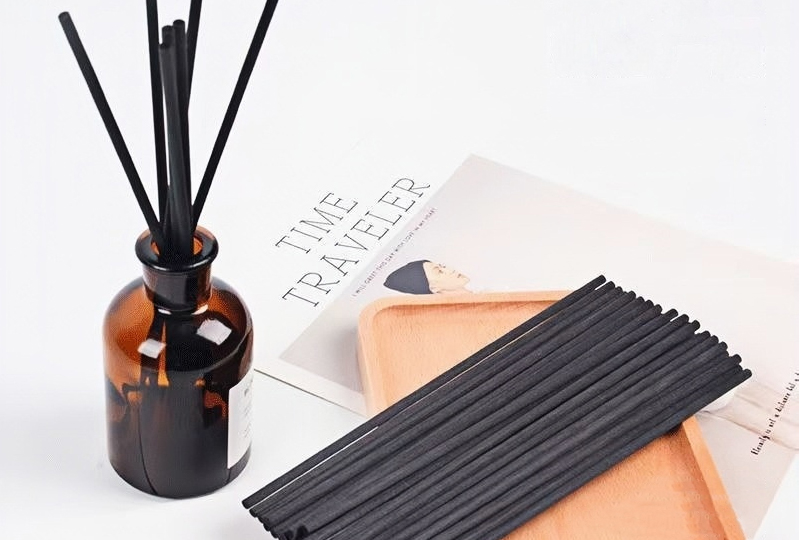
Reeds are the cheapest part of the system and the one most often ignored. A dense, well-cut set of sticks will scent a room evenly for weeks instead of working for three days and then stopping.
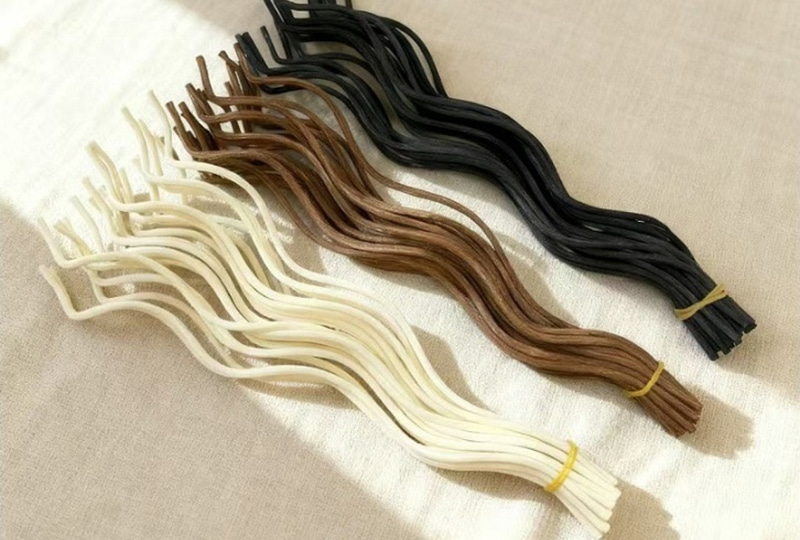 High-Density Reed Diffuser Sticks 3×260mmHigh-Density Reed Diffuser Sticks 3×260mm are designed for oil-based scent diffusers, helping fragrance disperse smoothly and consistently throughout a space. The dens...View Product →
Labelling rules differ from country to country, so your best protection is a supplier who answers questions quickly and in writing. This is the checklist we recommend to buyers:
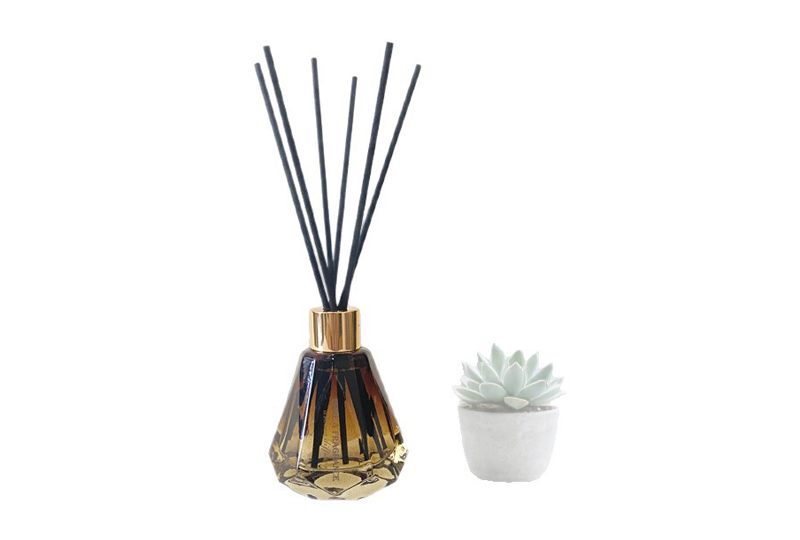 Long-Lasting 65ml Aromatherapy Reed DiffuserThe Long-Lasting 65ml Aromatherapy Reed Diffuser is designed to gently fill your living space with a continuous and balanced fragrance. Using natural reed sticks and h...View Product →
Leo Home is a home fragrance supplier working with importers, retailers, and brand owners across North America, Europe, and the Middle East. When a buyer asks whether reed diffusers are safe, we answer with documents rather than adjectives: phthalate-free fragrance options, IFRA compliance statements, and material specifications for every bottle, reed, and refill we ship.
Our team covers product development, international sourcing, and cross-border marketing, so we sit between the fragrance house, the container supplier, and the customer who has to stand behind the finished product. Every order passes inspection from raw material intake to final packing, and we support OEM and ODM projects when a brand wants its own scent, bottle, or reed length.
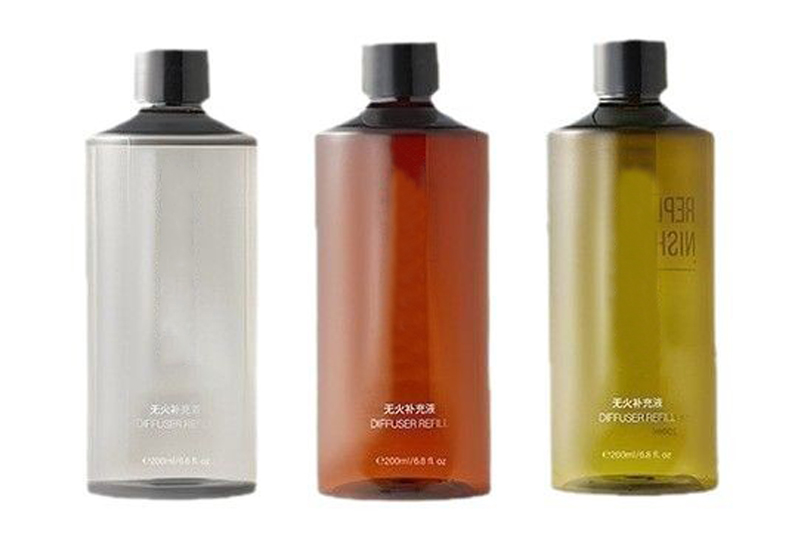
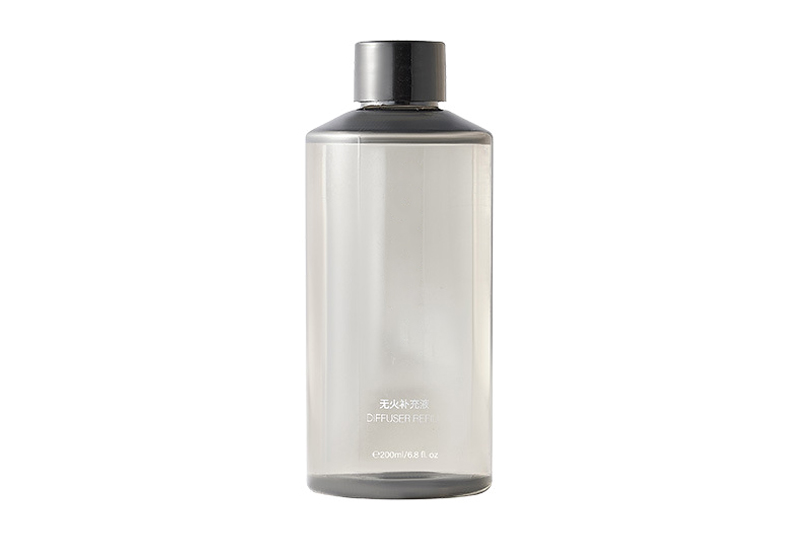 200ml Aromatherapy Reed Diffuser Refill OilThis 200ml aromatherapy reed diffuser refill oil is designed to conveniently replenish your favorite home fragrance diffuser. With six fragrance options available, it ...View Product →
So, are reed diffusers safe? In ordinary use, yes, and they remain one of the gentler ways to scent a home: no flame, no soot, no electricity. The risks that do exist are ordinary too, from irritation in poorly ventilated rooms to spills on good furniture and curious pets. Choose a supplier who can name what is in the bottle, keep it out of reach, let the air move, and a reed diffuser will quietly do its job for weeks.
If you are planning next season's range, our notes on home fragrance trends for 2026 cover what buyers are asking for now.

Room 1701, Building C1, Wangjing, Xiaoshan District, Hangzhou City, Zhejiang Province, China.

+86-15937257616

Copyright© 2026 Hangzhou Leo Home Trading Co., Ltd. All Rights Reserved.

Luxury Candles Home Fragrance Manufacturers Modern Candles Factory