 English
 Français
News
Home / News / Industry News / Benefits of Buying Candles in Bulk: A Practical Guide for Wholesale Buyers
Content
If you have ever placed a small candle order, sold out three weeks later, and then waited another six weeks for a reorder, you already know why bulk buying appeals to retailers, event planners and brand owners. The savings are real. But they are rarely the whole story, and they are rarely the main reason experienced buyers keep ordering by the case.
In our day-to-day work we talk with importers, gift companies, hospitality buyers and small fragrance brands shipping into North America, Europe and the Middle East. The questions tend to repeat: what does buying in volume actually get me, and where does it go wrong? Here is the honest version, without the sales pitch.
A bulk order does not turn an ordinary candle into an exceptional one. What it changes is your cost structure, your supply rhythm, and how much control you have over what finally arrives in the box. Price breaks usually start at case quantities and improve again at pallet level, but the headline discount is only one line in the calculation.
The larger numbers often sit somewhere less visible: fewer purchase orders to process, one set of shipping documents instead of five, one inspection instead of five, and a lower freight cost per unit because cartons and pallets are loaded closer to capacity. For a buyer moving two or three thousand units a year, those soft costs can rival the unit-price saving itself.
It helps to separate the genuine advantages from the ones that only look good on a quotation sheet. The comparison below is the one we usually sketch out with new buyers.
| Factor | Small, frequent orders | One bulk order |
|---|---|---|
| Unit price | List price, often with a small minimum | Tiered pricing at case and pallet levels |
| Freight per unit | Higher, because cartons ship partly empty | Lower, with cartons and pallets filled efficiently |
| Admin and paperwork | Repeated orders, invoices and inspections | One order cycle and one document set |
| Stockout risk | High during peak season | Low, provided storage and cash flow allow |
| Cash and space | Low commitment | Capital tied up, plus dry storage room needed |
| Design flexibility | Easy to change with every order | Best locked in before production starts |
Ask any retailer who has reordered a favourite candle and received a slightly different shade of amber glass, a wick that burns a little hotter, or a scent that reads sharper than the sample. None of it is dramatic on its own, but customers notice, and the complaint lands on the retailer rather than the factory.
Ordering in volume from a single production run keeps wax lot, fragrance batch, wick specification and vessel colour much tighter. That consistency is what allows a shop to display the same candle across three seasons, or a hotel to place the same jar in four hundred rooms without a mismatch. It also makes your own quality checks meaningful: if the reference sample and the delivery match, a spot check is enough.
One habit worth keeping is a retained sample set — one unit from each batch, labelled with the production date, kept in a cupboard away from heat and light. It costs almost nothing and settles most conversations about whether a scent has drifted.
 Amber Soy Wax Scented Jar CandleAmber glass jar candle with soy wax and cotton wick; the reusable lidded vessel helps preserve fragrance and supports batch sample keeping.View Product →
Candle demand is seasonal in a way that catches new buyers off guard. Gift season, wedding season and the run-up to winter all pull on the same production capacity, and ocean freight from Asia to Europe or North America often adds several weeks door to door before you count production time.
Holding a buffer changes the conversation with your own customers. Instead of telling a buyer that a scent is unavailable until February, you can fill the order from stock and reorder on your own schedule. For gift and hamper businesses, that buffer is often the difference between participating in a season and watching it.
There is a practical limit, of course. Candles are sensitive to heat and direct sun, so a bulk parcel needs a dry, shaded space that stays reasonably cool — a spare room in a shop is fine; a metal container in full sun is not.
 Floral Minimalist Three-Candle Gift SetThree 60g botanical-illustrated glass candles in a refined gift box, suited to gifts and display; a modest trial order can grow into repeat volumes.View Product →
Volume also changes what a supplier is willing to do with you. Custom fragrance blends, printed labels, bespoke vessels and gift-box assembly all carry setup work, and that setup is far easier to absorb across a larger run than across two hundred pieces. Buyers who start with a modest trial order and grow into repeat volumes usually get better access to customization than buyers who ask for something entirely bespoke on day one.
If you are developing your own line, it helps to work through the specification in a fixed order: capacity first, then vessel material, then wax and wick, then fragrance and packaging. Our customization process is laid out step by step for exactly that reason — it keeps a project from drifting while decisions are still open.
For brands that fill their own vessels rather than buying finished candles, the volume argument applies to raw materials as well. Wax, wicks and fragrance oils are all more economical by the case, and buying the same wax lot across a production run keeps your pour behaviour predictable.
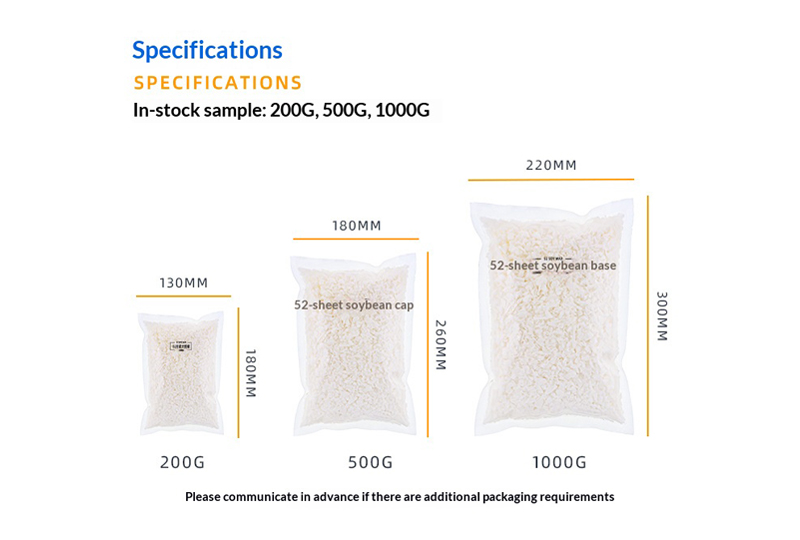 Multi-Type DIY Candle Wax CollectionSoy, beeswax, coconut and paraffin waxes with melting-point and application notes; useful for studios buying raw materials by the case.View Product →
The benefits are genuine, but they are conditional. These are the mistakes we see most often, and each one is avoidable.
A good supplier will answer these without hesitation. If the answers stay vague, that is information too.
Wax choice deserves particular attention, because it drives cost, burn behaviour and how you describe the product to your own customers. We keep a plain-language comparison of soy, paraffin and coconut wax on hand for buyers who are still deciding, and it is a reasonable place to start before you commit to a volume.
The benefits of buying candles in bulk come down to three things that compound over time: a lower cost per unit, a supply rhythm you control instead of one your best-selling scent controls for you, and enough consistency that customers stop noticing the details. The risks are real but manageable — storage, cash flow, and the discipline to test before you commit.
Start with a sample, test it properly, then scale in steps you can absorb. That approach has served the buyers we work with far better than a single bold order, and it usually produces a product line that lasts longer than one season.

Room 1701, Building C1, Wangjing, Xiaoshan District, Hangzhou City, Zhejiang Province, China.

+86-15937257616

Copyright© 2026 Hangzhou Leo Home Trading Co., Ltd. All Rights Reserved.

Luxury Candles Home Fragrance Manufacturers Modern Candles Factory