 English
 Français
News
Home / News / Industry News / Beeswax Blocks for Candles: A Buyer's Guide to Grades, Blends & Sourcing
Content
Beeswax blocks for candles sit at the heart of some of the oldest candle-making traditions in the world, and they still earn their place on a modern production table. Unlike fully blended waxes, beeswax arrives with a character of its own: a faint honeyed note, a dense grain, and a burn that lasts noticeably longer than softer waxes. For candle makers, that character is both an advantage and a constraint, because beeswax behaves differently from soy, coconut, or paraffin the moment it hits the melter.
This guide is written for the people who buy wax in volume and then have to make it work: product developers, brand owners, and workshop founders. We will walk through the forms beeswax is sold in, how grades and colours differ, how to blend it sensibly, and what to confirm with a supplier before you commit to a full order.
Beeswax is produced by honeybees to build comb, and its physical structure explains most of its candle behaviour. It melts somewhere between 62 and 65 degrees Celsius, which is higher than the soy waxes commonly used for container candles. That higher melt point gives beeswax its shape memory: a pillar or a sculpted candle made from pure beeswax holds its form in a warm room far better than a soft soy equivalent would.
The trade-off shows up in the burn. Beeswax is dense, so the wick has to pull fuel through a firmer material. A wick that is too small will tunnel down the centre of the candle, while one that is too large produces a flame tall enough to overheat the vessel and scorch the fragrance. Beeswax also contracts slightly as it cools, so a second pour or a quick pass with a heat gun is standard practice for anyone pouring beeswax into a container.
Two other properties matter commercially. The first is scent: unrefined beeswax carries a soft honey aroma of its own, which can either complement a fragrance oil or compete with it. The second is cost. Beeswax is the most expensive of the mainstream candle waxes, which is exactly why so few production candles use it at one hundred percent.
Suppliers describe beeswax in several physical forms, and the choice affects the rhythm of your workshop as much as the finished candle does.
| Form | Melting Speed | Typical Use | Best Suited To |
|---|---|---|---|
| Blocks | Slowest | Pillars, tapers, large pours | Bulk producers and studio makers |
| Pellets | Fast | Container candles and blends | Small batches and accurate weighing |
| Flakes | Fastest | Even blending with soy or coconut | Sample runs and delicate formulas |
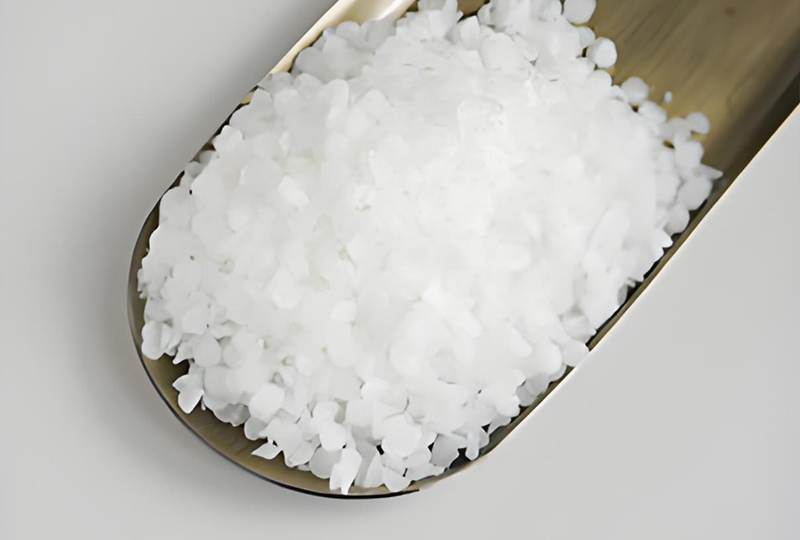
Solid blocks are the traditional format and still the most economical per kilo, but they demand a shaver, a grater, or a heavy-duty melter with enough patience. Pellets pour and weigh like any other pellet wax and melt without leaving unmelted chunks at the bottom of the pot, which makes them the practical answer for most commercial work.
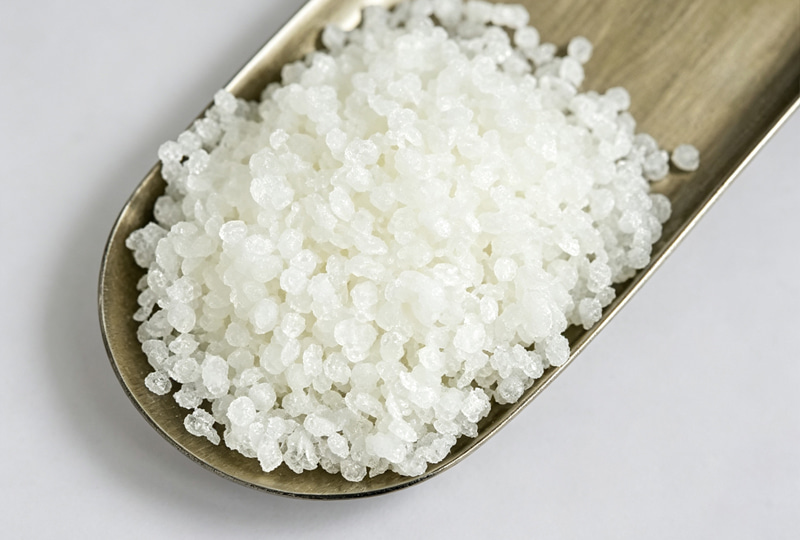 White Beeswax Pellets for Decorative and Container Candle MakingGranular white beeswax with a 60°C melt point and 80–85°C pour, flexible for detailed decorative work and up to 10% fragrance oil.View Product →
Beeswax is graded largely by how thoroughly it has been filtered after harvesting. Yellow beeswax keeps its natural pigments and much of its honey aroma, so it suits rustic pillars, sculpted pieces, and art candles where a warm amber tone is part of the design. White beeswax has been filtered and naturally bleached, giving a paler colour and a much quieter scent profile, which is what most scented container candles need.
Grade A white beeswax is the tier we recommend when colour consistency matters. Fewer impurities means fewer dark specks in a poured candle, a more predictable melt, and less variation from batch to batch, which matters when a retail buyer expects the same product twice a year.
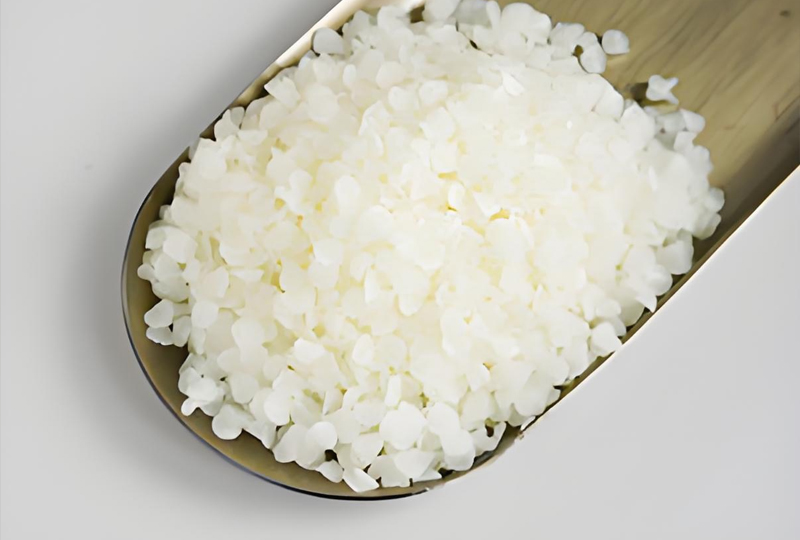 Grade A White Beeswax for Consistent Decorative and Blended CandlesHigher-purity granular white beeswax for consistent color, blending into hand-rolled, carved, and custom formula candles while requiring care in cold conditions.View Product →
Most commercial beeswax candles are blends. A 70/30 soy-to-beeswax mix is a common starting point for container candles, 50/50 produces a firmer and slower-burning candle, and pure beeswax is usually reserved for pillars, tapers, and sculpted shapes that need to stand on their own.
Adding beeswax raises the melt point of the blend, hardens the surface, and extends burn time. Add too much and container candles begin to tunnel, crack, or pull away from the glass. It helps to think of beeswax as a structural additive rather than a base, and to adjust the fragrance load and wick size each time you change the ratio. If you are still deciding on your base wax, our comparison of soy, paraffin, and coconut wax is a useful reference before you settle on a formula.
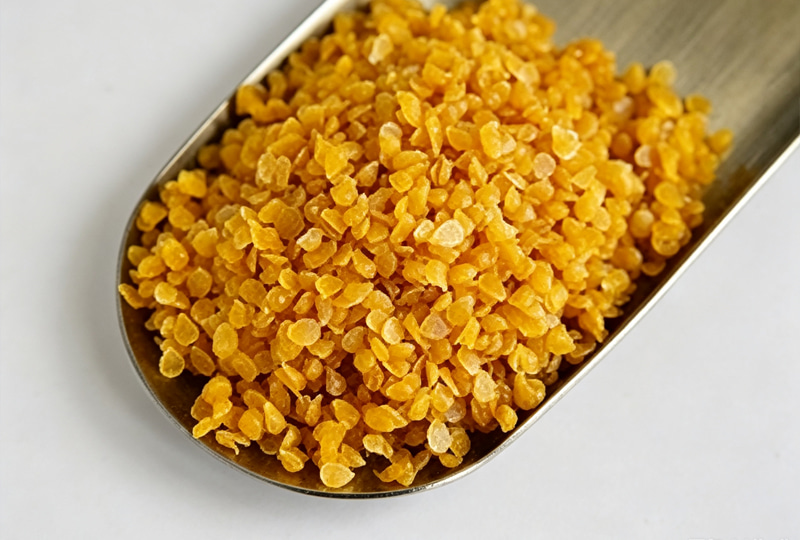 Natural Yellow Beeswax Granules for Rustic and Hand-Rolled CandlesAdditive-free golden beeswax with a 60°C melt point, 80–85°C pour, and up to 10% fragrance, suited to pliable rustic and hand-rolled candles.View Product →
Beeswax blends generally need a larger wick than an all-soy candle of the same diameter, because the wax is more viscous when melted. Cotton wicks work well but often need to step up one or two sizes; wooden wicks pair naturally with beeswax, particularly in pillars and rustic vessels, and they give the crackling sound many buyers associate with natural wax.
Fragrance load is the other common stumbling block. Beeswax holds fragrance less readily than soy, so most makers stay in the six to eight percent range and accept a slightly softer scent throw than they would get from a pure soy candle. A cure of five to seven days lets the fragrance bind properly before you judge the result. Testing too early is the single most common reason a beeswax blend gets blamed for weak throw when the formula is actually fine.
Trial pours are cheap compared with a failed production run, and beeswax rewards a disciplined test protocol. A simple sequence covers most of what you need to know:
Pay attention to how the surface looks after the second pour as well. Pitting, sinkholes, and a visible line where the top-up layer meets the first pour are all signs that your pour temperature or cooling environment needs adjusting.
Once a formula works, sourcing becomes the real project. Beeswax is a seasonal agricultural material, so colour and aroma can shift between harvests, and a supplier who cannot hold a specification across the year will create problems for a retail product that needs to look identical every time.
That last point is where a trading partner earns its keep. Our team buys wax, wicks, vessels, and fragrance oils from separate specialist suppliers and consolidates them into a single shipment, which is often what a smaller brand needs to reach a workable order volume. Every batch goes through inspection before it leaves, from wax colour and melt behaviour through to finished candle testing. If you want a specific block size, colour, or a private-label blend, the customization process starts with gram weight and capacity, then moves on to vessel material and finish.
Beeswax blocks for candles are not the cheapest material on the shelf, and they are not the easiest to work with. What they offer is a density, a burn time, and a natural warmth that few synthetic waxes replicate, and that is why demand for beeswax blends keeps growing among buyers looking for something a little more honest. Start with a small trial, keep your records, and scale only once the formula behaves the same way three times in a row.

Room 1701, Building C1, Wangjing, Xiaoshan District, Hangzhou City, Zhejiang Province, China.

+86-15937257616

Copyright© 2026 Hangzhou Leo Home Trading Co., Ltd. All Rights Reserved.

Luxury Candles Home Fragrance Manufacturers Modern Candles Factory