 English
 Français
News
Home / News / Industry News / Spa Candles Buying Guide: Choosing the Right Vessels, Waxes, and Scents
Content
Choosing a spa candle starts with safety and burn reliability, not just a pretty fragrance label. In a spa setting, candles need to burn cleanly and evenly, resist drafts and condensation, and create an atmosphere that supports calm instead of distracting from it. For buyers, this means examining wax, wick, vessel, and supplier quality before you settle on a scent line.
A spa candle is not a one-size-fits-all product. The candle used at the reception desk may need to burn for eight hours, while the one in a treatment room may only be lit for sixty minutes. The candle sold in the retail area may need a visually appealing jar for unboxing, while the candle used in a massage room must not interfere with a client's breathing. These different jobs require different product specs, and a supplier that can explain those trade-offs is more valuable than one that only sends a brochure.
The term “spa candle” is not a regulated category. It is a functional description for scented candles designed for relaxation spaces. What sets them apart from ordinary home candles are four core characteristics: clean and low-soot burning, a moderate but consistent fragrance throw, a long enough burn time for the space, and a vessel that stays safe to touch or move.
In a spa, you are dealing with elements that normal living rooms do not have: steam, essential oil vapor, heated treatment beds, and frequently moving staff. A candle with a high fragrance load may smell fine in a warehouse but become overwhelming in a small wet room. A cotton wick that burns well in a dry studio may develop mushrooming in a humid suite. A glass container that feels fine in a showroom may get too hot when covered with a towel. That is why spa candle selection should be based on performance data, not on marketing language.
For most spa venues, the practical checklist includes:
Wax choice sets the base for burn performance. Soy wax is the most common starting point for spa collections because it melts at a lower temperature, holds fragrance reasonably well, and comes from a renewable source. A standard soy wax has a melting point around 52°C, which means the melt pool stays smaller and the jar surface does not heat up as sharply as with harder waxes. Coconut wax offers a similar profile with a slightly smoother texture and stronger fragrance release per gram, though it is often blended with soy for cost stability. Beeswax is harder and slower-burning, but it has a natural honey note that can clash with some spa fragrance blends.
Paraffin wax is still used in many scented candle formulas because it provides a powerful fragrance throw and a very smooth top. However, it produces more soot and carries a less natural story. In a spa environment where clean and organic positioning matters, many buyers choose natural wax blends with 10–30% coconut or beeswax to improve burn quality without losing scent strength.
Wick selection is just as important. A cotton wick gives a quiet, predictable flame and is the low-risk option for most glass and ceramic jars. A wooden wick creates a soft crackle that many spas like as an acoustic detail, but it needs a carefully matched width and a well-centered position. Wooden wicks also tend to have a shorter recommended burn time and may require a deeper melt pool to stay lit. Before you finalize the wick, it is useful to compare the two options in the same jar and wax formula. Our detailed comparison of wooden wick vs. cotton wick explains how flame height, sound, and fragrance throw differ across common wax blends.
When reviewing supplier specifications, ask for burn test reports that include flame height, melt pool diameter, jar surface temperature, and total burn time. These numbers tell you whether a candle can actually sit safely on a treatment table or in a guest room without causing an incident.
Fragrance is the emotional center of a spa candle. Lavender remains the most requested scent because its floral profile is familiar and relaxing. Eucalyptus and rosemary add a freshness that works well in treatment rooms. Sea salt and driftwood bring a neutral costal mood that fits hotel spas, while cedarwood and sandalwood add a grounding base for massage areas. Most spa collections avoid heavy gourmand and high-sweetness scents because they can feel intrusive.
Fragrance load matters more than people often realize. Most spa candles use a fragrance load between 5% and 10% depending on wax type and wick size. A higher load does not always mean a stronger scent; if the wax cannot hold the oil, the fragrance will pool on the surface and create an uneven throw. Essential oils can be used alone, but they often have a shorter scent throw and a higher cost. A blend of essential oils and cosmetic-grade fragrance oils usually gives the best balance of natural positioning and consistent performance.
One practical way to design a spa collection is to create a three-tier scent architecture:
When you test candles, do it in the actual room type where they will be used. Cold throw alone can be misleading; the hot throw in a high-ceiling yoga studio may be much weaker than in a compact facial room. Ask for a 30-minute burn test with the door closed and then an open-door test to evaluate how quickly the scent disperses.
Vessel material does more than hold the candle. It conducts heat, defines safety, and reinforces brand aesthetics. The five most common vessel materials in spa candle lines are glass, ceramic, cement, metal, and marble. Each one has a different behavior in a humid, fast-moving environment.
| Material | Aesthetic | Heat Conductivity | Typical Use |
|---|---|---|---|
| Glass | Clean, minimal, transparent enough to show wax color | Moderate; frosted or tinted glass reduces glare | Single-wick candles in treatment rooms and hotel rooms |
| Ceramic | Natural, earthy, tactile; matte or glossy glaze options | Low; stays cool to the touch during typical burns | Branded spa jars and longer-burning candles |
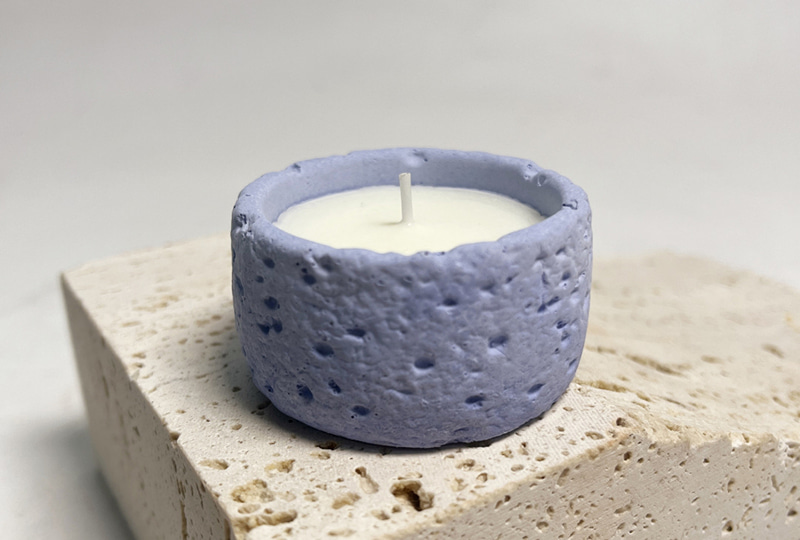
| Cement | Sculptural, textured, contemporary | Low conductivity but heavy; may need protective pad | Decorative display on reception counters or shelves |
| Metal | Lightweight, industrial, allows printed branding | High conductivity; surface can become hot | Travel sets, retail impulse buys, and giveaways |
| Marble | Premium, cool, stone-like finish, visually distinctive | Low conductivity but fragile if dropped | High-end spa collections and VIP suites |
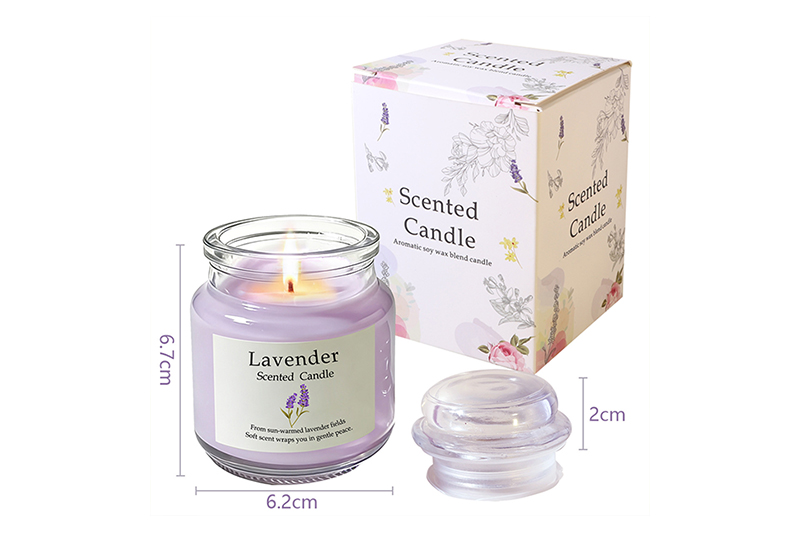
For a typical spa, frosted glass or a softly glazed ceramic jar works best because it balances heat safety with a calm visual. A product like a lavender soy wax frosted glass jar candle is easy to place in treatment rooms and suites. The frosted surface hides slight wax discoloration and diffuses the flame glow in a soothing way. Similarly, a matte green single-wick ceramic jar candle adds a botanical sculpture-like element that fits nature-inspired spa interiors without looking too decorative.
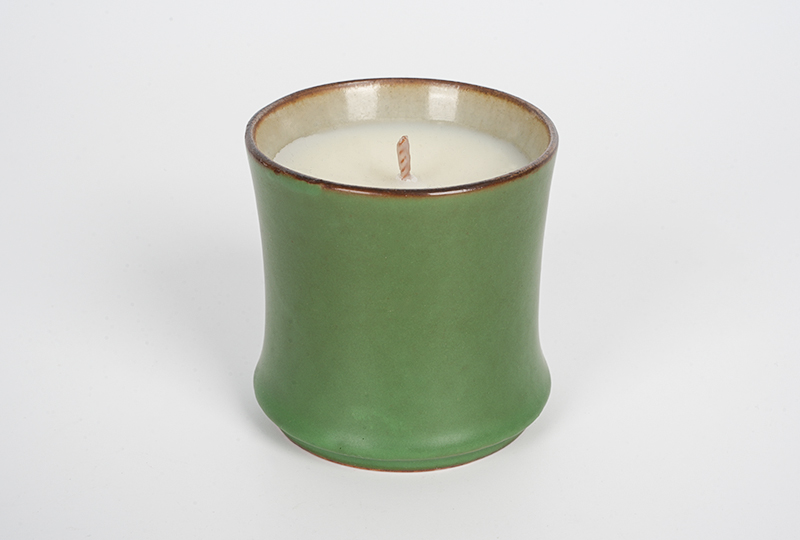 Matte Green Single-Wick Ceramic Jar Candle Suppliers, Company - Hangzhou Leo HomLeo Home is Matte Green Single-Wick Ceramic Jar Candle Suppliers and Company in China, Custom Matte Green Single-Wick Ceramic Jar Candle ...View Product →
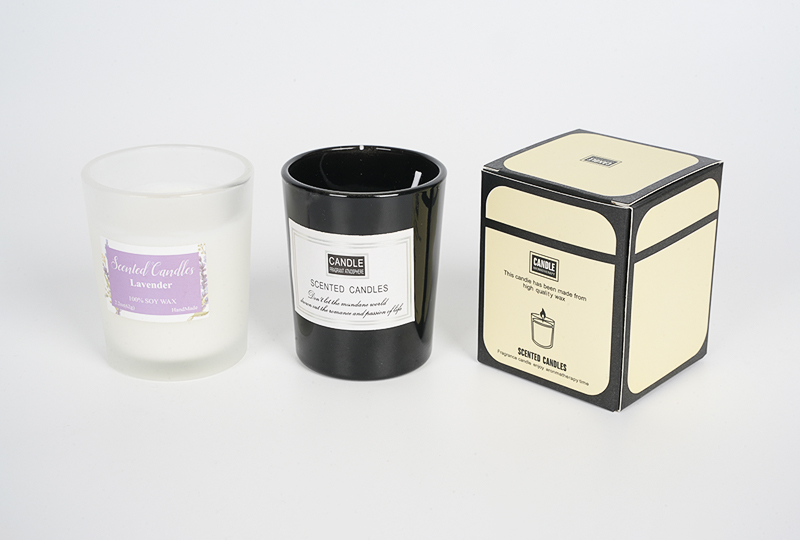 Lavender Soy Wax Frosted Glass Jar Candle Suppliers, Company - Hangzhou Leo HomeLeo Home is Lavender Soy Wax Frosted Glass Jar Candle Suppliers and Company in China, Custom Lavender Soy Wax Frosted Glass Jar Candle fo...View Product →
When you compare vessel options for a large order, consider weight and freight cost first. Cement and marble add significant shipping weight, which raises landed cost per unit. Metal tins are the lightest but require careful label placement and warning instructions because the surface heats up faster. Glass is versatile but needs protective packaging. A good supplier should be able to provide packaging condition recommendations for each material and arrange carton dimensions that minimize breakage.
From a procurement perspective, the bigger risk in spa candles is consistency across batches. A supplier that can control wax temperature, wick centering, jar fill level, and fragrance load will deliver candles that burn the same from the first order to the tenth. Look for a partner that openly shares specifications and burn-test results, and that can support both finished candles and components.
OEM/ODM flexibility is another deciding factor. For a new spa brand, you may want a custom fragrance, a private-label jar, a specific wick sound, or a gift-ready box. A trading and supply-chain company can coordinate raw materials, production, and packaging in one flow, which reduces communication errors and lead time. Because many spa programs also need matching reed diffusers, room sprays, and scented tablets, having one partner for the full fragrance line is simpler than managing multiple factories.
For welcome amenities and retail add-ons, a ready-made set gives you immediate inventory without waiting for full custom production. A three-scent botanical soy candle set is a practical choice for gift suites and spa boutiques because it offers variety in one box and introduces guests to several fragrance families. When you are ready to move beyond stock items, the custom route then allows you to adjust the exact wax blend, wick length, label finish, and carton design to match your brand.
 3-Scent Botanical Soy Candle Set — Rose, Lavender & Osmanthus Suppliers, CompanyLeo Home is 3-Scent Botanical Soy Candle Set — Rose, Lavender & Osmanthus Suppliers and Company in China, Custom 3-Scent Botanical Soy Ca...View Product →
Before committing to a supplier, ask three direct questions:
The answers will tell you whether your spa candle program is being treated as a product or as an ongoing service. A supplier with a stable internal process is also more likely to keep delivery dates predictable, which matters for seasonal hotel openings and retail launches.
At the end of the day, a spa candle should create a predictable, comfortable experience every time it is lit. The right combination of natural wax, appropriate wick, well-tested fragrance, and a suitable vessel will do that. Once that combination is in place, the commercial side becomes smoother: repeat orders, consistent quality, and a collection that keeps your brand in your guests' memory.
If you are planning a new spa candle line, start from the product and supply structure rather than from a trend. Compare the burn behavior of different vessels, test fragrances in the actual room size, and ask suppliers for transparent quality data. With the right sourcing partner, you can build a spa candle assortment that feels calm, performs reliably, and supports your business in both guest rooms and retail shelves. You can begin by exploring a spa candle collection that already reflects these principles, then adjust the details to your own brand identity.

Room 1701, Building C1, Wangjing, Xiaoshan District, Hangzhou City, Zhejiang Province, China.

+86-15937257616

Copyright© 2026 Hangzhou Leo Home Trading Co., Ltd. All Rights Reserved.

Luxury Candles Home Fragrance Manufacturers Modern Candles Factory