 English
 Français
News
Content
- 1 How Each Diffuser Type Works: The Core Mechanism
- 2 Scent Strength & Coverage: Which Diffuser Fills Your Space Best?
- 3 Cost Analysis: Upfront Price vs. Long-Term Operating Costs
- 4 Maintenance & Durability: How to Keep Your Diffuser Running
- 5 Material Matters: How Diffuser Housing Affects Performance
- 6 Safety & Environmental Considerations
- 7 B2B Buyer’s Checklist: What to Look for When Ordering in Bulk
- 8 Decision Matrix: Which Diffuser Is Best for Your Use Case?
How Each Diffuser Type Works: The Core Mechanism
Every diffuser falls into one of three fundamental categories based on how it releases essential oils into the air. The table below cuts through the noise and shows you exactly what’s happening inside each device.
| Feature | Ultrasonic Diffuser | Heat Diffuser | Passive Diffuser |
|---|---|---|---|
| How It Works | High-frequency vibrations atomize water and essential oil into a fine, cool mist. | A gentle warming element evaporates the oil, releasing fragrance into the air. | Natural airflow or capillary action draws oil through a porous surface, allowing slow evaporation. |
| Water Required | Yes | Sometimes (depending on model) | No |
| Alters Oil Chemistry | No — cold mist preserves therapeutic properties | Yes — heat can degrade some delicate compounds | No — oil remains chemically intact |
| Typical Noise Level | Below 30dB, often with a soft trickle | Below 20dB, virtually silent | 0dB, completely silent |
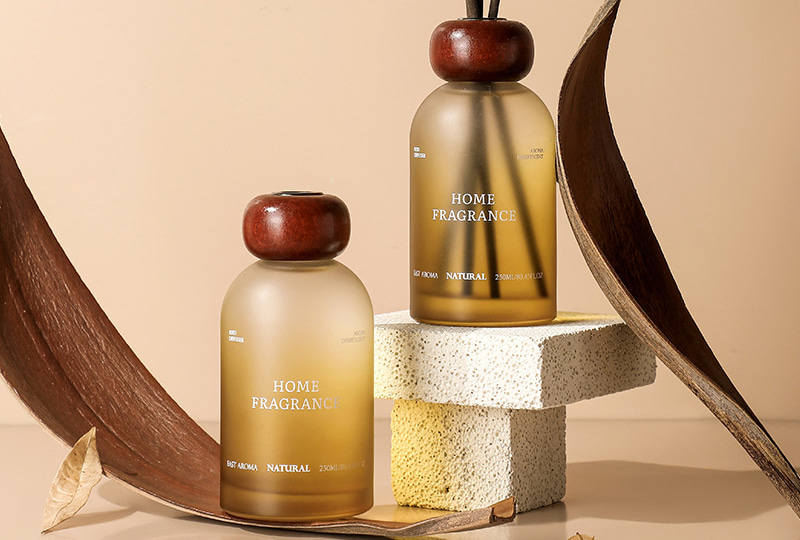
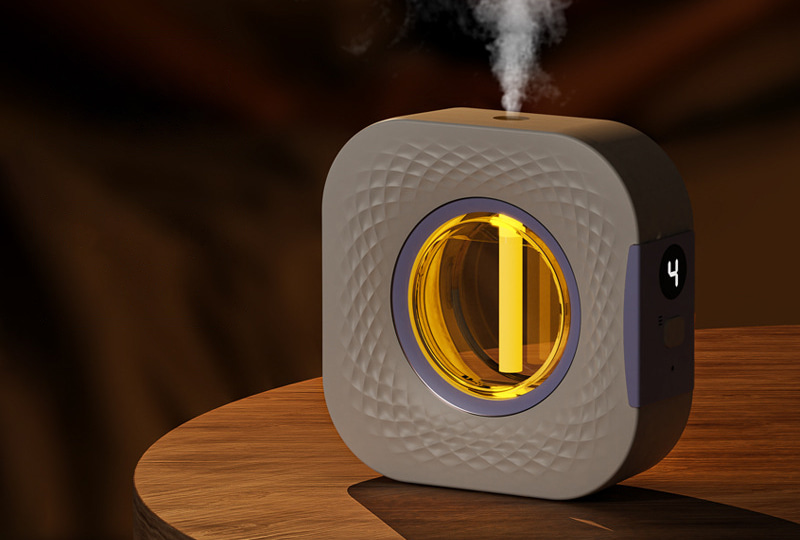
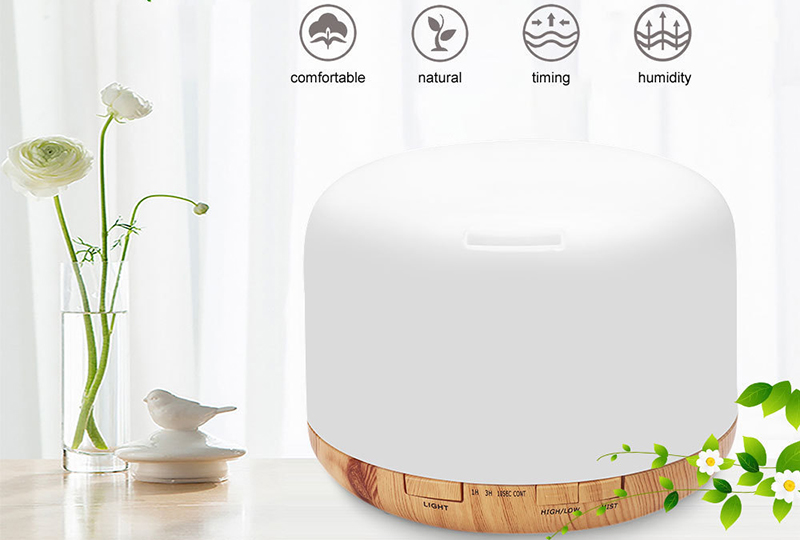
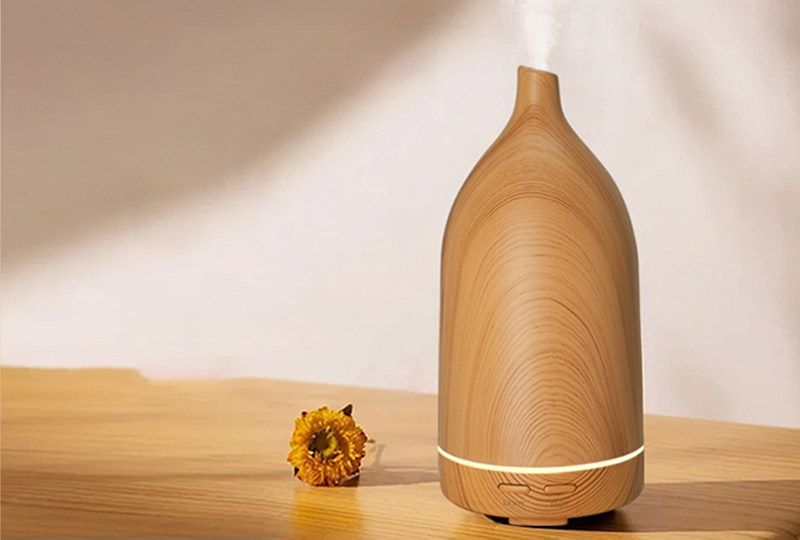
Ultrasonic diffusers rely on a vibrating diaphragm to create that fine mist you see floating above the waterline. The essential oil isn’t burned or heated, so its molecular structure stays intact. In contrast, heat diffusers warm the oil just enough to encourage evaporation. This gentle heat can alter some of the lighter aromatic notes, but for most everyday fragrance applications the difference is barely noticeable. Passive diffusers skip mechanics altogether. A reed stick, a clay pendant, or a simple diatomaceous earth disk lets the oil travel upward by capillary action and then release its scent naturally.
If you want a diffuser that doubles as a small humidifier, ultrasonic is your only real option among the three. Heat and passive units don’t add moisture to the air, which makes them better suited for already humid environments.
Scent Strength & Coverage: Which Diffuser Fills Your Space Best?
Coverage area is the first number most buyers ask about — and for good reason. A diffuser that can’t reach the far side of a conference room or living area simply doesn’t do its job.
| Attribute | Ultrasonic | Heat | Passive |
|---|---|---|---|
| Coverage (sq ft) | 200–500 | 100–300 | 50–150 |
| Intensity Control | Multi-level mist adjustment | Typically fixed, depends on heat setting | Fixed — surface area and airflow determine output |
| Scent Duration (8-hour fill) | 6–8 hours continuous | 5–7 hours intermittent | 4–6 hours, declining slowly |
A quality ultrasonic diffuser can fill a 500-square-foot open-plan room with consistent fragrance. The mist carries the scent evenly, and you can dial the output up for a busy afternoon or down for a quiet evening. Heat diffusers work best in medium-sized rooms: a 200-square-foot office or a cozy den. Their strength is locked to the heating element’s temperature, so you don’t get the same fine-tuned control. Passive diffusers shine in small, confined spaces. A bathroom, a walk-in closet, or the cubby beside your desk is where a reed diffuser or a scented tablet truly performs. For large commercial lobbies, only a high-capacity ultrasonic unit delivers consistent, adjustable throw over 400 square feet.
If scent throw is your top priority, start with ultrasonic. If silence matters more than raw power, heat wins. And if you need a zero-maintenance, always-on presence in a tiny room, passive is the clear answer.
Cost Analysis: Upfront Price vs. Long-Term Operating Costs
Buying the diffuser is just the first transaction. The ongoing cost of essential oil, replacement pads, and electricity often adds up to more than the device itself within the first year.
| Cost Component | Ultrasonic | Heat | Passive |
|---|---|---|---|
| Typical Purchase Price | $15 – $50 | $10 – $30 | $5 – $20 |
| Oil Consumption (ml/hour) | 0.5 – 1.0 | 0.3 – 0.5 | 0.1 – 0.3 |
| Electricity (monthly, approx.) | $0.10 – $0.30 | $0.30 – $0.80 | $0.00 |
| Replacement Parts (annual) | $3 – $8 (filters or discs) | $2 – $5 (heating pads) | $10 – $25 (new reeds, tablets, or stones) |
| Estimated Total First-Year Cost | $60 – $150 | $45 – $110 | $30 – $80 |
The upfront price can be deceiving. A $10 passive diffuser looks like the bargain option, but those reed sticks and ceramic stones need replacing every few months. Ultrasonic diffusers consume more oil per hour because they mist continuously, yet for many buyers the superior coverage justifies the higher consumable spend. For a medium-sized office used 40 hours a week, a heat diffuser often delivers the best balance of low initial investment and moderate oil consumption.
If you’re purchasing in bulk for a chain of spas or retail stores, the per-unit operating cost becomes a key negotiating point. Standardizing on one heat diffuser model with predictable oil usage makes monthly budgeting far easier than mixing ultrasonic and passive units across locations.
Maintenance & Durability: How to Keep Your Diffuser Running
Neglected diffusers don’t just perform poorly — they can become health hazards. Each type demands a different level of attention, and the consequences of skipping a cleaning cycle vary widely.
- Ultrasonic diffusers: Clean once a week. Empty leftover water, wipe the tank with a mild vinegar solution or rubbing alcohol, and unclog the mist nozzle. Failure to do this invites mold and bacteria that then aerosolize into your breathing air.
- Heat diffusers: Wipe the heating dish every 2–4 weeks to remove oil residue that can polymerize into a sticky film. Deep heating plates sometimes require a gentle scraping if oil has carbonized.
- Passive diffusers: No cleaning needed. When the reeds become saturated and lose wicking ability, flip them or replace them. Clay stones and diatomaceous earth disks simply get replaced after a few months.
Ultrasonic units have the shortest average lifespan in a heavy-use setting — typically 2 to 3 years — because the vibrating diaphragm wears out. Heat diffusers can last 4 to 5 years with proper care. Passive diffusers have no mechanical parts and can function indefinitely, though the scent-carrying medium degrades. If you’re outfitting a hotel lobby that runs 24/7, factor in ultrasonic diaphragm replacements every 18 months as part of your maintenance budget.
For a passive diffuser system, the maintenance checklist is essentially nonexistent. That zero-care property makes passive options especially attractive for retail displays and gift sets where the end user may not commit to regular upkeep.
Material Matters: How Diffuser Housing Affects Performance
The material that encases your diffuser isn’t just an aesthetic choice. It influences heat retention, scent adsorption, and long-term durability — sometimes in ways that undermine the diffuser’s primary function.
| Material | Scent Adsorption | Heat Retention | Durability | Best Suited For |
|---|---|---|---|---|
| Ceramic | Low — easy to wipe clean | Moderate — stays warm for heat diffusers | High, but can chip | Heat diffusers, decorative passive vessels |
| Glass | Near zero — scent won’t linger | Low — cools quickly | Medium — breakable | Ultrasonic tanks, premium passive diffusers |
| Plastic (PP/ABS) | Very low | Low | High — impact resistant | Budget ultrasonic units, portable diffusers |
| Metal (aluminum/steel) | Low, but some alloys can react with acidic oils | High — excellent for heat diffusers | Very high | Commercial heat diffusers, sturdy enclosures |
| Cement / Diatomaceous Earth | High — porous surface slowly releases adsorbed scent | Moderate | Moderate — can absorb moisture and crack | Passive diffuser stones, incense burners |
Cement and diatomaceous earth deserve special mention. Their microscopic pores soak up oil and release it gradually over days, which effectively turns the housing itself into a secondary passive diffuser. This boosts perceived scent longevity, but it also means that changing fragrances becomes messy — the old scent lingers. For commercial settings where scent identity must stay consistent month after month, a glass or metal ultrasonic unit prevents cross-contamination between oil changes.
If you’re launching a branded line of diffusers, material selection directly impacts mold design, minimum order quantities, and per-unit cost. A ceramic heat diffuser carries different tooling requirements than an injection-molded plastic ultrasonic model, and those upfront engineering fees need to be weighed against your expected sales volume.
Safety & Environmental Considerations
Safety isn’t a bullet point to glance over — it’s the reason many commercial buyers choose one diffuser technology over another. Regulations, liability, and user experience all hang on these details.
- Child and pet safety: Hot surfaces on heat diffusers demand caution. Ultrasonic units generate no external heat, but the mist is often tempting for toddlers to touch. Passive diffusers are completely safe to handle and contain no liquid that could spill.
- Oil integrity: Ultrasonic and passive methods leave essential oil molecules unaltered, preserving aromatherapeutic properties. Heat diffusers can degrade the most volatile compounds — limonene and linalool start to break down above 120°F — which means the scent profile may shift subtly over an extended warm cycle.
- Noise pollution: Ultrasonic diffusers produce a faint hum or gurgle; in a silent meditation room, that can be a distraction. Heat diffusers are effectively silent. Passive diffusers are dead quiet — zero decibels.
- Energy consumption: Ultrasonic models pull 5–15 watts, heat diffusers 20–40 watts. Passive diffusers draw no power at all. Over a year of continuous operation, a heat diffuser costs about $3–$7 more in electricity than an ultrasonic unit of equivalent coverage.
- Indoor air quality: Ultrasonic mist increases humidity; in damp climates, that can raise mold risk if ventilation is poor. Heat and passive diffusers don’t affect humidity.
For a daycare, school, or healthcare facility, passive diffusers often pass the strictest safety reviews without modification. They require no electrical certification, produce no emissions beyond the natural oil vapor, and present zero burn risk. Many large-scale hospitality projects choose ultrasonic for central scenting but isolate the machine in a locked utility closet, piping the mist through ducts to avoid guest interaction with water tanks.
B2B Buyer’s Checklist: What to Look for When Ordering in Bulk
Individual consumers can afford to buy on impulse. Wholesale buyers and procurement managers need a different set of criteria — one where per-unit cost matters, but total supply chain reliability matters more.
- Minimum Order Quantity (MOQ): Some factories require 500 units per SKU; others work with 100. Know your warehousing capacity before you commit. A lower MOQ gives you flexibility to test new designs, but the unit price will be higher.
- Customization depth: Check whether the supplier can adjust color, housing material, branding (laser engraving or pad printing), scent formula, and packaging. The more you can tailor, the better your margin on a private-label line.
- Lead times and logistics: A standard production run takes 25–40 days, but Chinese holidays and peak shipping season can push that to 60 days. Build in a 15-day buffer and confirm whether the supplier uses FOB or CIF terms.
- Certifications: For the US market, FCC and UL (or ETL) certifications are non-negotiable for any powered diffuser. Passive diffusers may only need materials compliance (RoHS, REACH). Ask for valid copies — don’t rely on a verbal assurance.
- After-sales support: Establish replacement parts availability for ultrasonic diaphragms and heating elements. A supplier who keeps spares on hand for 3+ years saves you from having to scrap entire units when a small component fails.
If you’re sourcing for a boutique chain that wants matching diffuser sets across multiple room types, a vendor who can supply ultrasonic, heat, and passive units under one roof dramatically simplifies logistics. Working with a single supplier for the full range also strengthens your negotiation position on volume discounts and custom tooling.
Decision Matrix: Which Diffuser Is Best for Your Use Case?
The right choice snaps into focus once you line up your space, your scent goals, and your tolerance for maintenance. Use the matrix below to shortlist the diffuser type that matches your reality.
| Scenario | Space Size | Desired Scent Strength | Budget | Recommended Type |
|---|---|---|---|---|
| Home office, nursery, or small bedroom | Under 200 sq ft | Subtle to moderate | Under $20 | Passive diffuser |
| Living room, classroom, retail floor | 200–400 sq ft | Moderate to strong | $20–$40 | Ultrasonic diffuser |
| Quiet meditation space, spa treatment room | 100–250 sq ft | Gentle, consistent | $15–$30 | Heat diffuser |
| Large lobby, open-plan office, restaurant | Over 400 sq ft | Strong, adjustable | $40+ | High-capacity ultrasonic diffuser |
| Gift item, hotel amenity, wedding favor | Personal use | Light, pleasant | $5–$15 | Passive diffuser (set) |
There is no single champion across all categories. Ultrasonic diffusers dominate in coverage and control, heat diffusers lead on silence and simplicity, and passive diffusers win when safety and zero maintenance are the absolute priorities. The most successful purchasing decisions happen when you stop looking for the "ultimate diffuser" and start matching the technology to the specific room, user, and budget it will serve.